

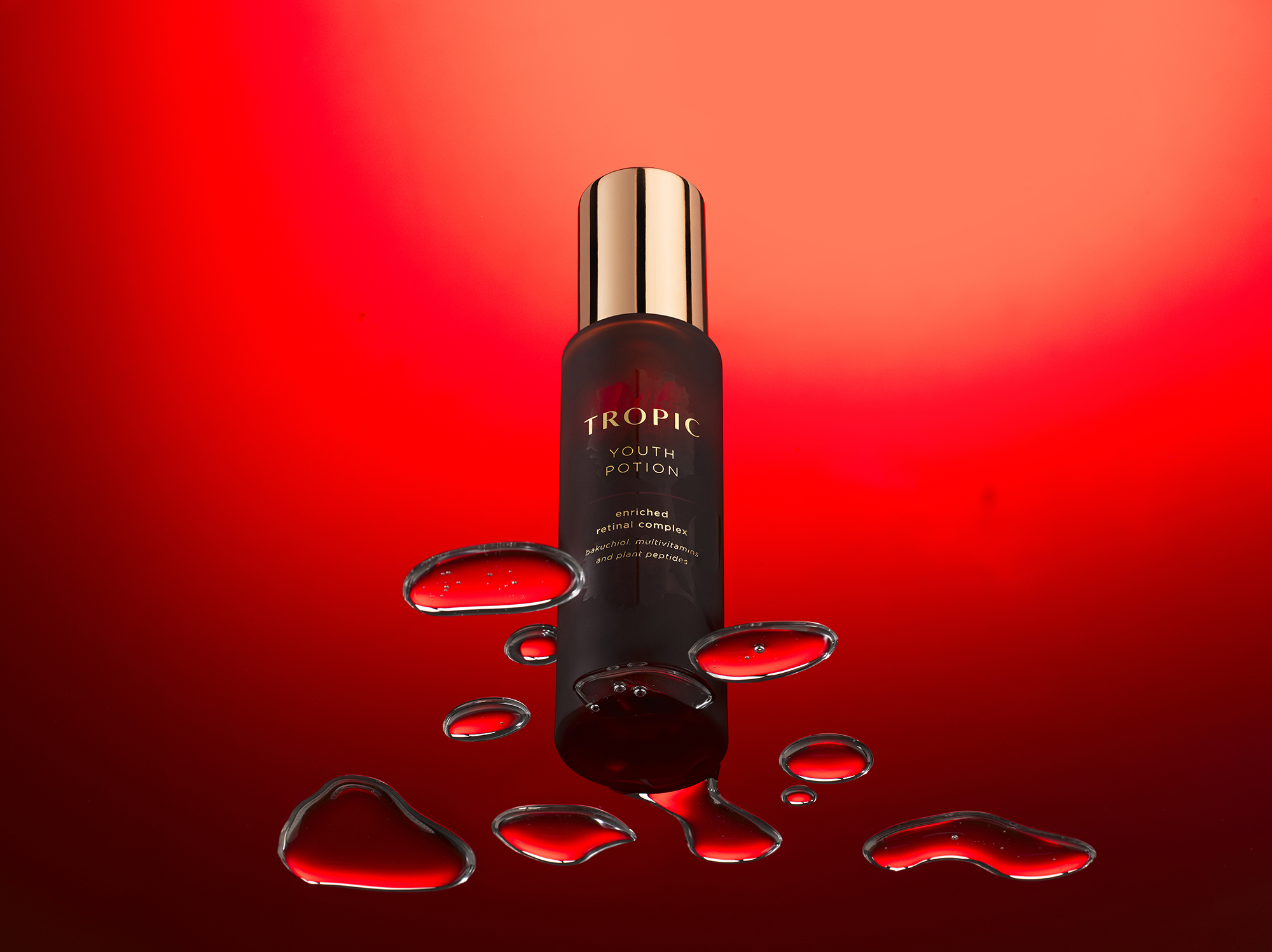
The pack shots versus lifestyle question gets posed as if it is about photography. It is not. It is about what the launch is trying to do.
Get the question right and the format mix is almost obvious. Get it wrong and you spend two days arguing about creative direction when what you really needed was clarity about commercial intent.
This guide is a decision framework for senior marketing and creative teams scoping a product shoot in London. It assumes you know what each format looks like. The question we are answering is which one your launch actually needs, and when both make sense in the same production.
The wrong question, and the right one
The wrong question is “which is better, pack shots or lifestyle?” The honest answer is neither. They do different jobs.
The right question is: what does this launch need to prove to the customer, and which format proves it fastest?
A skincare range launching on Amazon needs to prove product authenticity, finish, and clinical credibility before it needs to prove emotional aspiration. A travel-size set launching on Instagram needs to prove desirability and lifestyle context before it needs to prove technical specification. The product is the same. The format priority is not.
Once the launch question is framed that way, the format mix tends to choose itself.
What pack shots are built to do
Pack shots earn their place when the customer’s first decision is rational rather than emotional.
They are built to: show the product accurately, including finish, scale, and packaging detail. Read clearly at small sizes on PDPs and category grids. Comply with retailer specifications, including Amazon and the major UK supermarkets. Sit consistently across an entire range, so a 24-SKU collection looks like one collection.
They are not built to create desire on their own. A pack shot is information. It is the visual answer to “is this the right product, and can I trust it?” Once the customer is past that question, pack shots have done their job.
What lifestyle imagery is built to do
Lifestyle imagery earns its place when the customer’s first decision is emotional rather than rational.
It is built to: place the product inside a context the customer wants to be in. Communicate brand mood, aesthetic, and social positioning. Live as a hero on the homepage, in print, in paid social, or on retailer brand pages. Make the customer want the life that contains the product, then route them to the rational pack shot when they want to buy it.
Lifestyle imagery struggles when it is asked to do the work of pack shots. It is rarely PDP-ready, often retailer-non-compliant, and almost never consistent enough across a range to support a category grid.
A four-quadrant decision framework by launch type
Most launches fall into one of four quadrants. The right format mix follows the quadrant.
Listing-led launches
The customer enters the brand through a search result or a marketplace listing. Amazon, eBay, supermarket online, mass beauty retailers. The first impression is the listing image, and the launch lives or dies on PDP performance.
Format mix: pack shots heavily prioritised. Lifestyle as supporting content rather than hero. The investment goes into variant consistency, retailer compliance, and asset volume.
Brand-led launches
The customer enters through brand storytelling. A new fragrance launch, a heritage brand refresh, a luxury jewellery collection. The first impression is the campaign hero, and the customer arrives at the PDP already convinced.
Format mix: lifestyle and campaign stills as the lead investment. Pack shots are necessary but secondary, mainly for the brand’s own DTC site and for retailer asset packs. The hero work is where the budget lands.
Retail-led launches
The customer enters through a retailer’s curated environment. Selfridges beauty hall, Boots category page, Holland & Barrett wellness section. The retailer controls the framing, but the brand’s own assets sit alongside the retailer’s.
Format mix: a fuller balance. Pack shots that meet retailer specs are non-negotiable. Lifestyle content that the retailer can use in their own marketing is the differentiator. The launch budget should buy both, but the pack shots come first because the retailer will quietly drop a brand whose pack assets do not meet spec.
Hybrid launches
Most launches are some version of this. DTC site, two retailers, paid social, and PR. The customer enters through different doors depending on the channel.
Format mix: both, with the asset matrix doing the heavy lifting. Plan the pack shots first because they have the strictest constraints, then plan the lifestyle around the same production day where the lighting and set permit. Most hybrid launches can be captured in one well-sequenced day rather than two.
Where teams overspend on lifestyle (and underspend on pack shots)
The most common scoping mistake is over-investing in lifestyle relative to its job.
Lifestyle imagery is more visible, more emotionally satisfying, and easier to sign off in the brief stage. Pack shots feel mechanical by comparison. Marketing teams under launch pressure often allocate the budget to the visible work and try to absorb the pack shots into the same production day as an afterthought.
The cost lands later. Inconsistent pack shots get rejected by retailers. Variant gaps surface during the launch week. Categories grids look fragmented. The team ends up commissioning a second shoot to do the work the first one should have done.
The corrective is unglamorous: scope the pack shots first, properly, with the variant volume and retailer specs accounted for. Then build the lifestyle around what the day can carry.
How to brief both in a single production day
It can be done. Most of our days are exactly this. Three things make it work:
First, the asset matrix sits at the front of the brief. Pack shots are listed by SKU and crop. Lifestyle is listed by hero shot and supporting variants. Both have target counts.
Second, the order of the day is built around lighting state. Pack shots usually share a tighter, more controlled lighting setup. Lifestyle often needs a more atmospheric one. Sequencing them in blocks rather than alternating them keeps the day productive.
Third, approvals happen between blocks. Pack shots reviewed and signed off before the lifestyle set is built. Lifestyle reviewed before the day breaks down. Holding both to end-of-day creates rework with no time to absorb it.
A short worked example
A new candle brand launching this autumn: 12 SKUs across three scent families, listing on Amazon, Selfridges, and the brand’s own DTC site, with paid social as the primary acquisition channel.
The launch is hybrid. Format mix: pack shots for all 12 SKUs to Amazon spec, plus DTC and Selfridges crops. Lifestyle hero stills for each scent family (three total), with social cut-downs from the same setups.
One production day, structured: morning block for pack shots, all 12 captured against the same lighting setup with deliberate consistency, variant crops captured at the same time. Mid-day block for the three lifestyle heroes, set built once and adapted between scent families. Afternoon block for social verticals.
That delivers everything the launch needs. It is not a creative compromise. It is a planning win.
If you are scoping a launch and unsure whether your format mix is right for the customer journey, tell us the launch type and we will tell you the format mix you actually need.
Share your brief. We will come back the same day.