

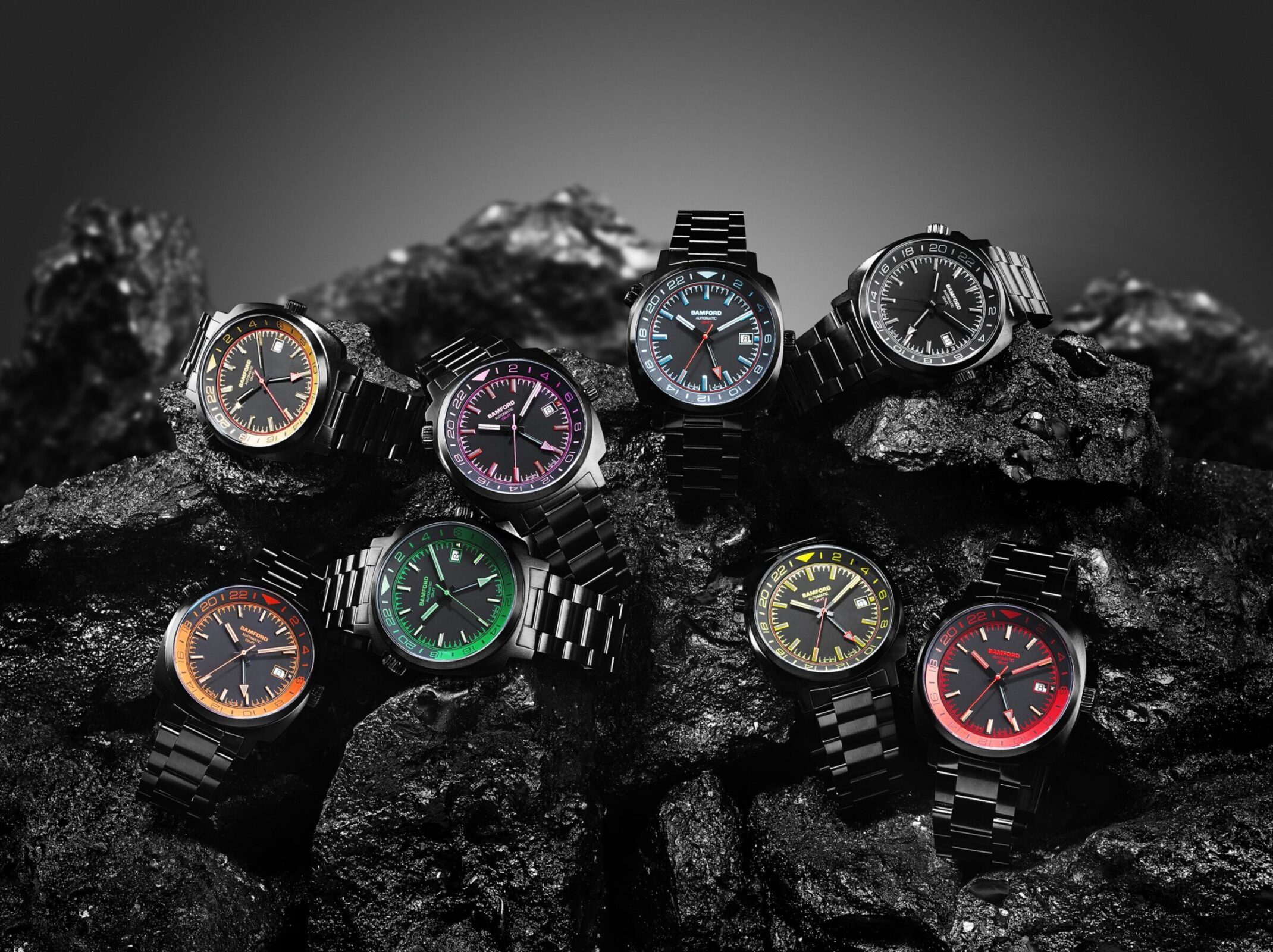
Authorised watch dealers and multi-brand retailers have specific photography needs that single-brand commissions do not face.
The dealer is selling pieces from multiple brands across multiple price points, often with strict brand-imagery guidelines from each manufacturer. The dealer’s own visual identity has to coexist with the brands they carry. The asset structure has to support both the dealer’s website and any brand-specific marketing requirements.
This guide is for authorised dealers, multi-brand retailers, pre-owned dealers, and auction houses commissioning watch photography in London. It is about how the production differs from single-brand work, what the asset structure should look like, and what to brief differently.
The multi-brand commission’s structural difference
A single-brand commission has one visual register, one set of brand guidelines, and one approval chain. The studio aligns to the brand’s existing direction and delivers within those constraints.
A multi-brand commission has multiple registers to navigate. Each brand the dealer carries may have its own guidelines, its own image-rights conventions, and its own commercial register that the dealer’s imagery has to respect.
The dealer also has their own visual identity, sitting underneath the brand identities. The dealer’s photography style across all the brands they carry has to read as their style, even while individual pieces respect each brand’s specific requirements.
The structural decisions that follow:
A consistent dealer-led visual register. The dealer chooses a lighting style, a composition convention, and a tonal treatment that holds across every brand they carry. Individual pieces sit within this register.
Brand-specific accommodations within the register. Where a brand has strict guidelines (image rights restrictions, mandated composition, specific colour treatment), the dealer’s standard register is adjusted accordingly.
Asset structure that supports multiple downstream uses. The dealer’s own website, possibly brand-specific marketing approvals, possibly resale platforms (Chrono24, Watchfinder, others), possibly auction house listings.
A specialist studio working with multi-brand dealers understands how to navigate this complexity. A studio commissioned only by single brands may struggle with the constraints.
What multi-brand retailers actually need
The asset structure for a multi-brand retailer typically includes:
E-commerce PDP imagery. Multiple angles per piece, retailer-spec dimensions, retailer-spec backgrounds. The dealer’s site usually has a standard PDP template that all pieces sit within.
Inventory rotation imagery. As pre-owned and current inventory rotates, new pieces need imagery quickly. The dealer often needs a production cadence rather than seasonal campaigns.
Brand-specific marketing assets. Where the dealer participates in brand-coordinated marketing (Rolex’s authorised dealer programmes, Patek’s marketing materials, brand-led campaigns), the dealer needs assets that meet the brand’s specifications.
Resale platform listings. Chrono24, Watchfinder, Bob’s Watches, and other secondary market platforms have their own image conventions. The dealer’s photography should anticipate these uses.
Auction catalogue imagery. Where the dealer participates in auction sales, the imagery has to meet auction house standards.
Press and editorial assets. Watch press (Hodinkee, ABlogtoWatch, Revolution, watch-specific media) regularly features dealer inventory. Editorial-register imagery extends the dealer’s reach.
Social and content marketing. The dealer’s own social presence requires regular content. The asset library should support ongoing content needs.
The asset matrix for a multi-brand dealer is broader than for a single brand. A specialist studio sets up an ongoing production relationship rather than a one-off commission.
Brand consistency across the multi-brand inventory
The single biggest commercial benefit of disciplined dealer photography is consistency across the inventory.
A dealer’s category page or inventory grid showing pieces from twenty different brands, all photographed with consistent dealer-led visual register, reads as one coherent shop. The same page showing pieces captured at different times, by different photographers, with drift in lighting and composition, reads as a fragmented inventory.
The discipline that holds dealer photography together:
A locked lighting setup that does not change between brands. The same lighting state photographs a Rolex Submariner as a Patek Calatrava as an A. Lange & Sohne. The brand identity comes through in the watch; the dealer identity comes through in the consistent production.
Standard angles and compositions across the inventory. Every watch hero at the same angle. Every detail shot at the same composition. The dealer’s visual identity comes from the production conventions.
Consistent retouch direction across the inventory. Same colour treatment, same shadow philosophy, same surface character handling. The retoucher works to dealer-level master direction.
Inventory rotation that maintains the standard. As new pieces arrive, they get photographed to the same standard. The asset library grows without quality drift.
This is operational discipline rather than aesthetic preference. It produces a dealer presence that reads as professional and considered across the inventory.
Brand guideline navigation
Some brands have strict guidelines for how their pieces should be photographed by authorised dealers.
Rolex, for example, has historically maintained strict brand-imagery requirements for authorised dealers. The dealer’s Rolex imagery has to meet the brand’s specifications, which may differ from the dealer’s standard register for other brands.
The pragmatic approach:
For brands with strict guidelines, the dealer maintains the brand’s specifications. The Rolex imagery on the dealer’s site follows Rolex’s conventions. The dealer’s broader visual register adjusts for these pieces.
For brands with looser guidelines, the dealer applies their standard register. Most brands give authorised dealers flexibility within general brand-respect principles. The dealer’s photography for these brands follows the dealer’s own standard.
For pre-owned pieces (outside the manufacturer’s direct programme), the dealer has full latitude. Pre-owned and vintage inventory typically does not face the same guideline constraints as new authorised dealer inventory.
A specialist studio working with the dealer maintains the brand-specific knowledge that supports these distinctions. The brief should specify which brands in the inventory have strict guidelines and which do not.
Production cadence for inventory rotation
Multi-brand dealers often need a production cadence rather than seasonal campaigns.
New inventory arrives regularly. Pre-owned pieces come and go. The dealer’s site has to keep pace with the inventory rotation.
The production patterns that work:
Weekly or fortnightly capture days. A regular slot in the studio’s calendar where the dealer ships new inventory for capture. Predictable rhythm, predictable delivery, predictable cost.
Tiered asset coverage. Hero pieces get full coverage (multiple angles, macros, lifestyle if appropriate). Standard inventory gets standard coverage (three to five angles). Quick-turnover pre-owned gets minimal coverage (two to three angles for fast listing).
Bulk-photography days for inventory backlogs. Where the dealer has a backlog of new arrivals, a dedicated bulk day captures many pieces under the same lighting state.
On-site photography for high-value or restricted pieces. Where transit risk or insurance constraints make studio capture impractical, the studio brings mobile production to the dealer’s premises.
This is closer to an ongoing service relationship than a transactional commission. The studio and the dealer build accumulated knowledge of the inventory, the photography conventions, and the workflow that supports both.
Briefing notes for multi-brand dealer shoots
The strongest briefs we receive from authorised dealers and multi-brand retailers:
The brand list and any guideline restrictions per brand. The asset matrix scope, including PDP coverage, resale platform requirements, and any auction or editorial uses. The production cadence required (one-off, regular weekly, bulk catch-up). The dealer’s existing visual register references. Sample shipping or on-site logistics, including insurance and handling requirements. The dealer-side approval and sign-off chain.
What does not need to be in the brief: detailed lighting instructions or attempts to specify the technical setup. Those are the studio’s decisions, made against the dealer’s standard register.
If you are an authorised watch dealer, multi-brand retailer, pre-owned dealer, or auction house commissioning photography in London, share the inventory scope and the production cadence required and we will plan the production around the ongoing needs. We work across watch photography, watch photography London, and jewellery photography at the Bankside studio.
Share your brief. We will come back the same day.