

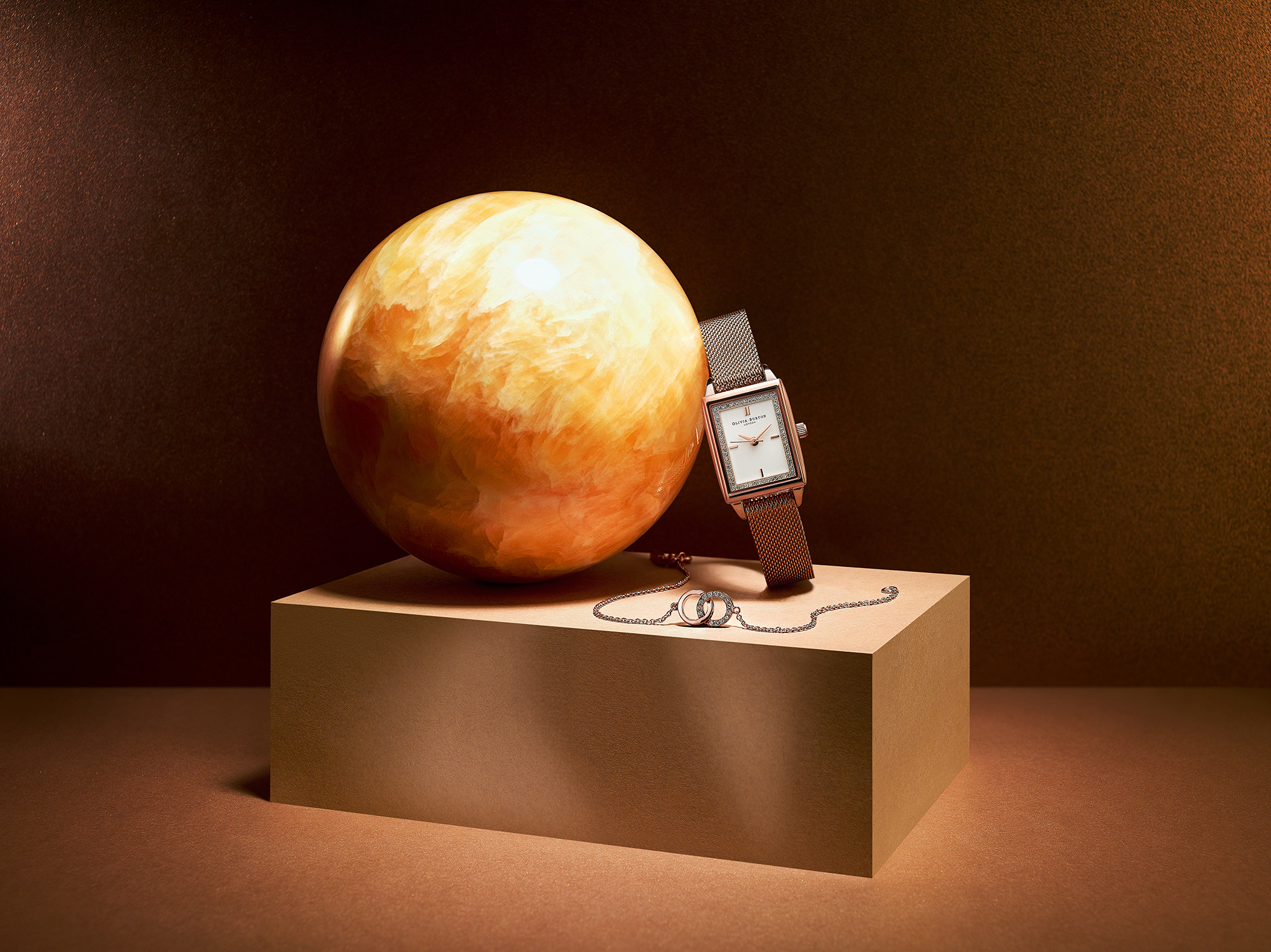
A watch is a small object that has to carry a large amount of meaning in a single image.
Brand teams commissioning luxury watch photography in London know this. The customer does not skim. They read every shot. They notice the bezel coating, the dial fidelity, the bracelet articulation, the lume application, the case-back finish. A photograph that is technically competent but commercially generic will lose them.
This guide is for brand teams, retailers, and authorised dealers commissioning watch photography for the first time, or for those moving up from a generalist studio to a specialist one. It is about what good looks like across the whole production, not just the moment the shutter fires.
Watch photography is not product photography wearing a tie
Generalist product studios can shoot watches. Most of them have. The problem is not technical capability. The problem is the assumptions a generalist brings to the day.
A generalist treats the watch as one of fifteen objects on the shoot list. They light it cleanly, capture the agreed angles, and move on. The result is honest, accurate photography that often fails commercially because the things that sell luxury watches, the small material choices the brand has made, are not visible.
Specialist watch photography starts from a different assumption. The watch is the subject of every frame, including the frames where it is not the only object in the shot. The lighting is built around the watch’s specific finish. The composition is designed to surface the details the brand uses in its marketing. The retouch direction is calibrated to the brand’s existing campaign work, not to the studio’s house style.
Brands that have worked with both generalists and specialists tend to feel the difference immediately. The first time a watch comes back from a specialist shoot, the marketing team usually says some version of “yes, that is what we have been trying to get for years.”
What a London watch shoot day actually looks like
A typical day at our Bankside studio for a watch brand or retailer:
Pre-shoot, the references arrive. Usually a list of model numbers, the brand’s existing campaign assets for tone reference, and any specific shots needed for new collections, retailer carousels, or press releases. The asset matrix is built from this and locked before the shoot date.
On the day, the watches arrive in transit cases with an authorised handler. There is usually a brand custodian on set, especially for high-value pieces. The day is structured around lighting setups rather than around models, because the same lighting state will serve multiple watches in a collection.
The capture order is built to maintain the lighting setup for as long as it is productive. A typical setup will run dial-and-bracelet hero shots across multiple models before changing the lighting for case-back details. Each shot is reviewed at high resolution between takes, because watch retouch is unforgiving and a problem caught on set is cheaper than a problem caught in post.
Delivery follows a structured Dropbox folder convention. Master files. Web-resolution exports. Retailer-specific crops. Press resolution if required. Each watch has its own folder. The retoucher’s notes accompany the delivery.
That is the shape of a productive day. It is calm by design.
Capturing dial, bezel, bracelet, case-back and lume
The five elements that decide how a watch reads in photography:
Dial. The dial is the brand. Colour fidelity has to be exact, indices have to read at every crop, applied logos have to be sharp. Reflective dials need lighting that reveals the surface texture without flattening it. Sun-burst dials need directional light that catches the radial pattern without overdoing it. Lacquered dials need careful highlight control or they read as plastic.
Bezel. The bezel often carries the brand’s most distinctive material. Ceramic, sapphire, knurled steel, gold inlay. Each behaves differently under light. Reflection control matters more on the bezel than almost anywhere else, because a misjudged highlight can flatten an expensive material into something cheap.
Bracelet. Articulation, finish, brushed and polished surface alternation, taper, end-link integration. These are the details collectors notice. A bracelet shot at the wrong angle hides the brand’s metalwork. The right angle reveals the engineering.
Case-back. Often the most photographically neglected element, frequently the most commercially important. Engraved logos, transparent sapphire showing the movement, screw-down detail, hallmarks. For some collectors the case-back is what convinces them the piece is the real thing.
Lume. The most technically demanding element. Capturing accurate lume requires either long exposure work or composite work, depending on the brand’s preference. Most luxury watch brands have an existing lume reference style, and the studio’s job is to match it precisely.
Multi-reference shoots: keeping a collection visually coherent
A new collection drop is rarely one watch. It is usually three to fifteen references that need to read as a coherent collection on the brand’s website, in retailer marketing, and across paid social.
Coherence is harder than it sounds. Each reference has slightly different proportions, finishes, and visual weight. Without a deliberate approach, the collection looks like fifteen separate shoots loosely associated by brand.
The discipline that holds a collection together: a shared lighting state for the hero angles, held across every reference even when individual watches would benefit from variation. A shared composition logic, including identical framing, identical shadow direction, and identical background tone. A shared retouch direction, calibrated once and applied uniformly. A QC step that compares every reference against the others before delivery.
This is what a watch photography studio means by collection consistency. It is not eyeballed. It is engineered.
Working with retailers, brands and authorised dealers
The brief differs by client type, and the studio should understand the difference.
A brand commissioning the work usually wants assets that will live across DTC, retail, and press. The work serves multiple downstream clients and the asset matrix is broader. Brand custodians often want approval involvement on set.
A retailer commissioning the work usually wants assets for their own platform, with the brand’s permission. The work has to meet the retailer’s own photographic conventions while staying true to the brand’s tone. Speed of turnaround is often more critical than for brand commissions.
An authorised dealer commissioning the work for their own marketing usually wants imagery that supports their location-specific positioning. The watches may be from multiple brands, and the consistency challenge is across a multi-brand window display rather than a single collection.
A specialist watch studio adjusts the production to suit the client type, not just the watches.
Retouch, authenticity and what should never be invented
Retouch direction on luxury watch work is a creative decision and a brand integrity decision in equal measure.
The retouch principles that hold:
What can be cleaned: dust, fingerprints, minor surface scratches that are not part of the watch’s character, transit marks on bracelets, environmental reflections in the crystal that distract from the dial.
What can be enhanced: the saturation of an applied logo so it reads at small sizes, the contrast on a bezel so the engraved markings hold up at thumbnail, the warmth of a lume capture so it matches the brand’s existing reference style.
What should never be invented: dial details that are not on the watch, finishes that are not present, lume properties that exceed reality, colour shifts that misrepresent the actual product. Customers who buy luxury watches notice when the photograph and the physical product diverge.
A specialist studio holds these lines without being asked. A generalist sometimes does not, because they are working from product retouch defaults rather than watch retouch defaults.
How to brief a watch shoot in a single page
The strongest watch briefs we receive fit on a single page.
What they include: the model numbers and finishes. The brand’s existing campaign tone reference. The asset matrix by destination. The approval owners. The on-set requirements (custodian, handler, transit case logistics). The delivery deadline.
What they do not include: long mood boards, exhaustive technical instructions, or attempts to brief the lighting in advance. Those decisions are the studio’s. The brief gives the studio the constraints; the studio brings the craft.
If you are commissioning a luxury watch shoot in London for the first time, share the references and we will plan the shoot around the collection.
Share your brief. We will come back the same day.