

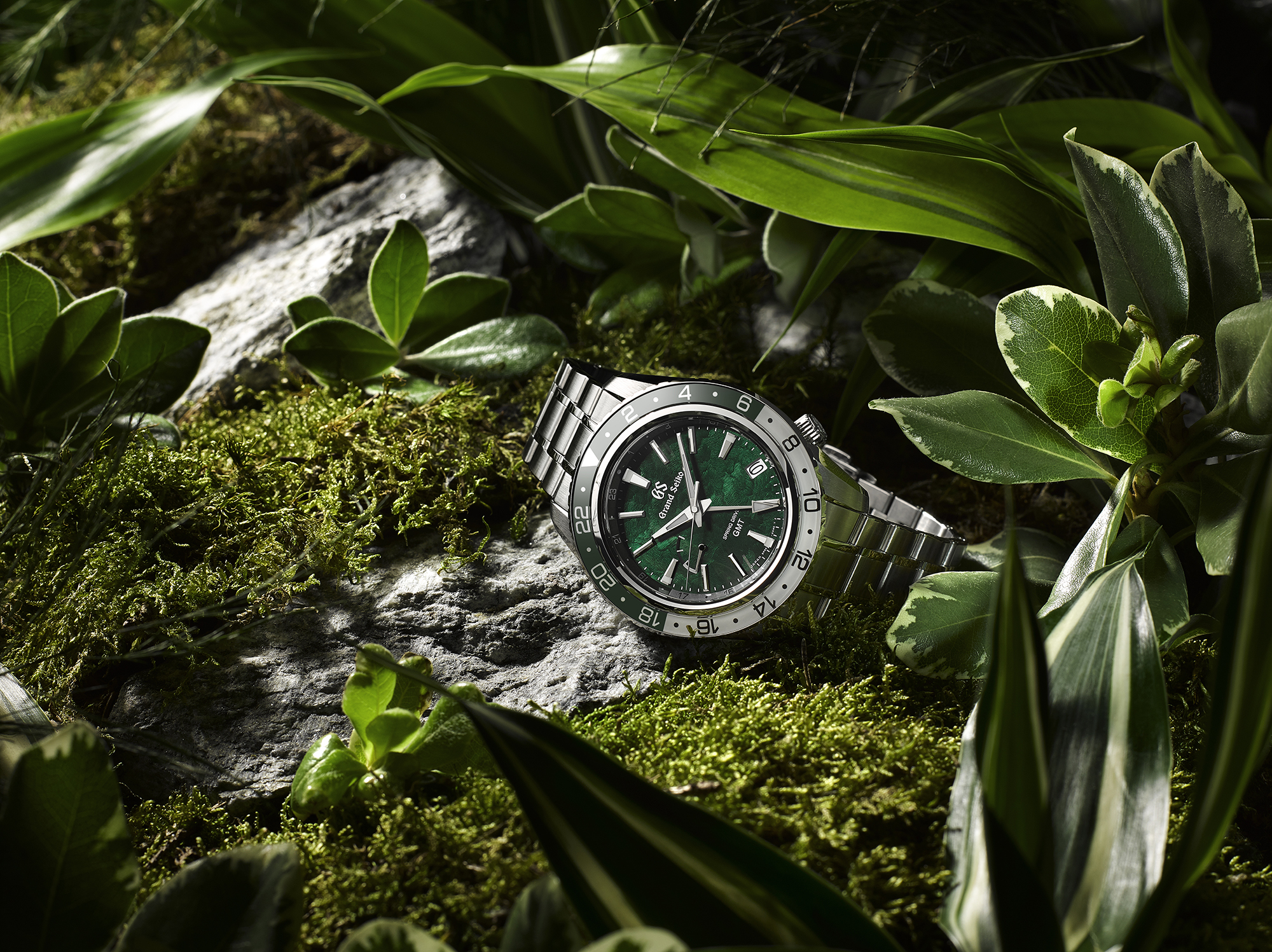
Watch buyers do not look at watches the way most people look at photographs.
A typical product photograph is taken in. A watch photograph is read. The eye lands on the dial first, then traces the bezel, then settles on the bracelet, then circles back to the case-back if the angle allows it. Each of those zones is doing distinct commercial work, and a photograph that fails on any one of them loses the buyer.
This guide is about how a specialist watch studio approaches the five zones that decide whether a luxury watch sells from an image. It is written for brand teams, marketing leads at watch retailers, and the small number of photographers who are about to take their first serious watch brief.
What the buyer’s eye lands on first
There is a predictable sequence to how a watch buyer reads a photograph. Eye-tracking studies on watch advertising consistently show the dial as the first fixation point, regardless of the rest of the composition. The buyer is checking, in fractions of a second, whether the dial is honest.
By honest, the buyer means: does the colour match what they have seen on the brand’s site, on dealer photographs, in real life if they have handled the piece. Does the indices placement read the way they expect. Are the applied logos sharp and at the correct depth.
If the dial passes the honesty check in the first second, the buyer reads on. If it does not, no amount of clever lighting or aspirational composition will recover the image.
Specialist watch photography starts from this fact. Every other decision in the shoot serves the dial.
Dial: colour fidelity, indices, applied logos
Colour fidelity is the single most demanding constraint on watch photography.
A blue dial is not a blue dial. It is a Tiffany blue, a Patek navy, a Grand Seiko Shizukuishi, a Tudor Black Bay blue. Each is a specific Pantone-equivalent that the brand has built campaigns around. The studio’s job is to match it under controlled lighting, capture it with a calibrated camera, and protect it through retouch.
The lighting choice matters more than the camera choice here. Mixed colour temperatures destroy dial fidelity. Studio strobes calibrated to daylight, with the working environment controlled, give the cleanest base. Anything else is a fight in retouch.
Indices placement is the second test. The buyer knows where the indices should sit. A small misalignment of a tritium dot, a slightly off-centre date window, or a logo that drifts a few degrees away from twelve o’clock will register as wrong even if the buyer cannot articulate why. Composition that respects the dial geometry matters.
Applied logos are the third. They have physical depth, and they need to read with that depth in the photograph. Flat lighting kills applied logos. Directional light with controlled shadow gives them dimension.
Bezel: coatings, ceramic, knurling, reflection control
Bezels are where most generalist watch photography fails.
The bezel sits at the edge of the watch face. It catches reflections from every direction. Lighting that flatters the dial often introduces unflattering bezel highlights. Without active reflection management, the bezel either flares out into hot spots or sinks into shadow, and either failure cheapens the watch.
The bezel choices that need specific attention:
Ceramic bezels. High refractive index, sensitive to direct light. Diffused light from above, with carefully placed flags to control where the light enters the bezel curve. The depth of black on a ceramic bezel is a brand signal; capturing it requires lighting that holds the black without losing the engraved markings.
Sapphire bezels. Even more reflection-prone than ceramic. Often need polarising techniques to control internal reflections without flattening the underlying metal.
Knurled or fluted bezels. The texture is the brand. Side-lighting that catches the fluted pattern brings the bezel to life. Front lighting flattens it. The angle of light has to be deliberate.
Coated bezels. PVD coatings and gold plating each have their own reflection properties. The studio should test the lighting setup against the specific coating before the day starts, not during it.
Bracelet: articulation, finishing, brushed vs polished
Bracelets are where the buyer judges the engineering.
A well-photographed bracelet shows: the articulation between links, the finish on each component, the alternation between brushed and polished surfaces where the brand has chosen that detail, the integration with the case at the end-link, and the taper from case to clasp if the bracelet narrows.
The shoot angle matters. A bracelet photographed straight-on hides the articulation. The right angle is usually three-quarter, with the watch lying or standing such that the bracelet curves into the frame and the alternating finishes catch the light differently.
For brands whose bracelets are part of the value proposition, the bracelet often deserves its own dedicated shot in the asset matrix, not just the secondary view of the hero composition.
Lume, case-back and crown: the trust signals
The smaller details that signal the watch is the real thing.
Lume. Capturing accurate lume is one of the most technical shots in watch photography. The brand has a specific lume reference style; the studio matches it. Composite work is often needed to combine a properly exposed dial with a properly exposed lume frame. Done well, the lume shot is one of the most-saved images on the brand’s site.
Case-back. For watches with display case-backs, the movement is the showpiece. The same craft that goes into the dial goes into the case-back composition: lighting that reveals the engraving without flattening the perlage, the bridge work, or the rotor detail. For solid case-backs, the engraving and hallmarks are the focus.
Crown. Often shot as part of the side profile rather than as its own frame, but the crown carries brand identity (logo, knurling, gold or steel) that deserves to read clearly. Side-profile shots that hide the crown undersell the watch.
Multi-reference visual consistency in a single shoot
When a brand commissions multiple references in one production, consistency across the references becomes its own discipline.
The principle: every reference is photographed against the same lighting setup for the hero composition, even when individual watches would benefit from variation. The collection shot is what holds the visual coherence on the brand’s website, on the retailer carousel, and in the campaign assets.
Variations exist for the close-up details: dial macros may need slight lighting adjustment for different dial finishes, case-back shots may need movement-specific lighting. But the hero composition stays consistent, and the variation is contained within the secondary frames.
This is the difference between a collection shoot and a series of individual shoots. The collection shoot delivers a grid that reads as one brand voice. The series of individual shoots delivers a folder.
When macro becomes product, and when product becomes macro
A note on the difference between macro and product framing.
A macro shot fills the frame with a small section of the watch: the dial centre, the bezel coating up close, the bracelet articulation in detail. Macros are extreme close-ups that reveal craftsmanship the viewer would not see in a normal product shot.
A product shot frames the whole watch, usually with surrounding context (a small amount of background, a styled prop, a reflective surface). Product shots tell the customer what the watch is. Macros tell them what it is made of.
The asset matrix should specify both, by destination. Hero product shots for category grids and retailer carousels. Macros for brand storytelling, campaign work, and the product page deep-scroll. Each format has its own commercial job.
A common scoping mistake is over-investing in macros and under-investing in product framing. Macros are emotionally satisfying for the brand team in the brief stage. Product framing is what actually converts on the watch photography PDP. Both belong in the matrix, in the right ratio.
If you have a reference you want photographed properly, send it through and we will plan the shoot around the watch.
Share your brief. We will come back the same day.