

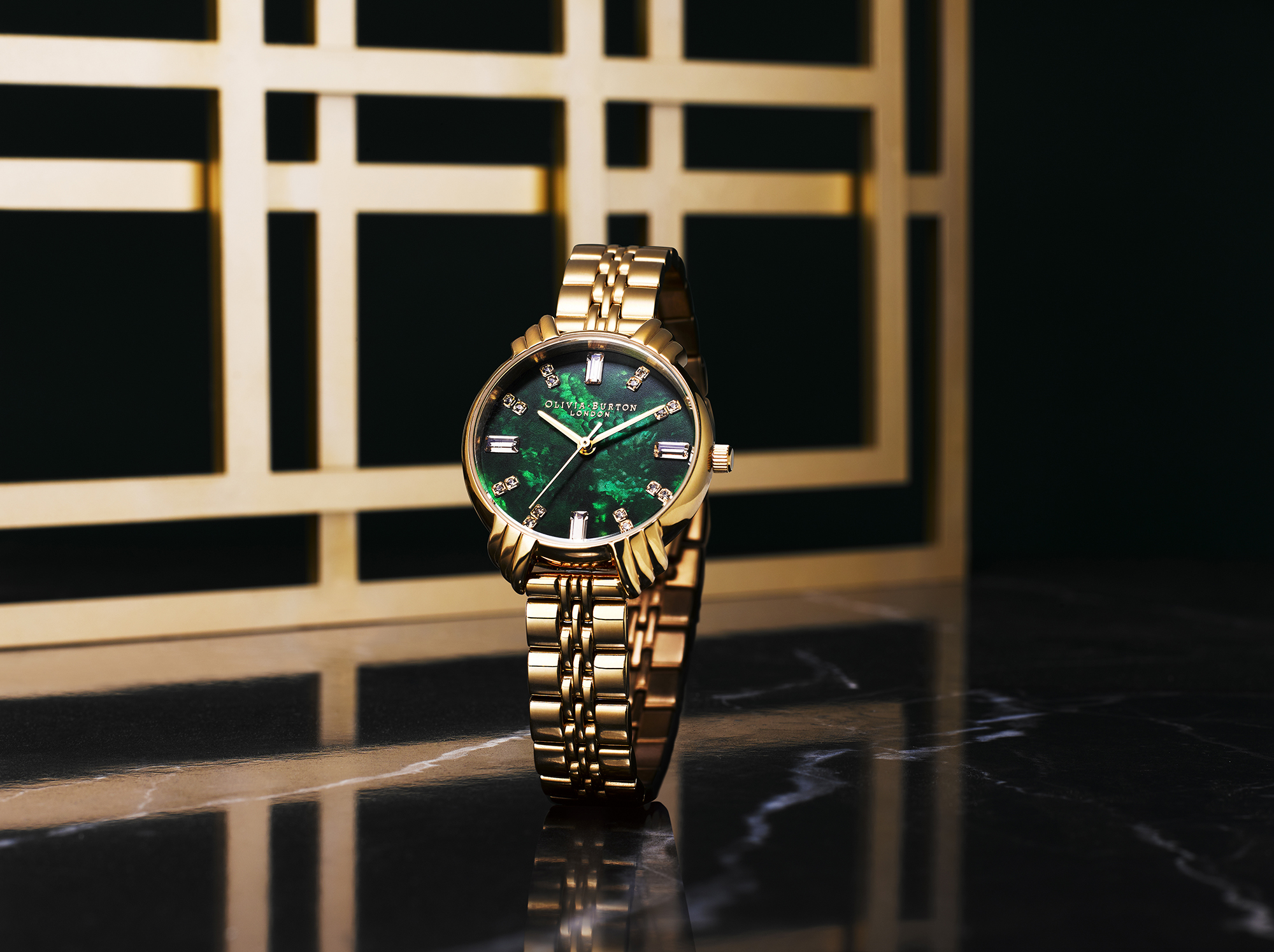
A watch on a wrist tells a different story than a watch on a plinth.
The plinth tells the customer what the watch is. The wrist tells them what owning it feels like. Both have a place in a watch brand’s asset mix, and brands that under-invest in lifestyle imagery often see their conversion plateau even when the product photography is technically excellent.
This guide is for watch brands and retailers scoping lifestyle photography in London. It is about what wristshot and in-context composition actually deliver commercially, how to plan the production, and what to brief differently from pure product photography.
What lifestyle imagery does for watches
Watch lifestyle imagery does three things product photography alone cannot.
It gives scale. A watch photographed in isolation can be any size. A watch on a wrist communicates how the piece will look when the customer is wearing it. For pieces where size matters commercially (everything from 36mm dress watches to 44mm sports pieces), the scale information matters.
It gives context. The watch in the customer’s life, at the kind of moment the customer might wear it. A diver on a boat. A dress watch at a desk. A pilot’s watch in a setting that suggests travel. The context positions the watch in the customer’s imagination.
It gives lifestyle aspiration. The customer is not just buying a watch; they are buying the version of themselves who wears that watch. Lifestyle imagery makes that version visible.
Strong watch brands use lifestyle imagery alongside product photography in a coordinated mix. Each format does its job, and the asset matrix delivers both.
What wristshots actually need
The wristshot is the foundational lifestyle composition for watch brands.
A wrist that fits the brand’s customer. Model casting matters more than for most product photography. The wrist needs to suggest the customer the brand is reaching for. For a luxury dress brand, that often means an older, more weathered wrist. For a contemporary lifestyle brand, that often means a younger, more diverse selection.
A watch that sits naturally on the wrist. The strap or bracelet sized correctly. The watch positioned where the customer would naturally wear it. The bracelet articulating naturally rather than stiffly.
Lighting that flatters both the wrist and the watch. Skin tones need to read true. Watch details need to remain visible. The two requirements sometimes conflict, and the studio resolves them through specific lighting choices.
A composition that puts the watch in the right relationship to the rest of the body. The hand position, the arm angle, the visible context (cuff, sleeve, table edge) all contribute to whether the wristshot reads naturally.
A useful crop range. Wristshots are used in many formats. The hero composition usually allows for tight crops (watch and immediate wrist), wider crops (showing the cuff or sleeve), and even wider crops (showing the broader context).
A specialist studio plans the wristshot to deliver all four crops from a single composition where possible.
In-context composition beyond the wrist
Beyond wristshots, watches benefit from in-context composition.
Object pairings. The watch sitting beside specific objects that signal lifestyle context. A dress watch beside fountain pen and notebook. A dive watch beside diving equipment. A racing chronograph beside motorsport ephemera. The pairings extend the brand’s positioning.
Surface contexts. The watch on specific surfaces that signal positioning. Leather, marble, brushed steel, weathered wood, raw concrete. Each surface contributes to the brand’s tonal register.
Lighting environment. Watches photographed in suggested daylight, evening, working light. The lighting time of day implies the moment of wearing.
Multiple-watch compositions. A watch alongside others from the same collection or the same brand. Useful for collection-led content and brand storytelling.
These compositions are stylistically richer than pure wristshots and require more pre-production work. They earn their place in campaign work, editorial press distribution, and brand storytelling rather than in standard PDP imagery.
The studio versus location decision
Watch lifestyle photography can be captured in studio or on location.
Studio lifestyle. The set is built to suggest the context. Lighting is controlled. The day runs predictably. Suitable for most lifestyle imagery, particularly for indoor contexts (desk, table, surface compositions).
Location lifestyle. The shoot happens in a real environment. Lighting is the location’s natural light, modified as needed. The day is subject to weather, permissions, and logistical complexity. Suitable for outdoor contexts, travel imagery, and lifestyle storytelling that requires real environments.
For most watch brand campaigns, the production day combines both. Studio work for the wristshots and surface compositions where controlled lighting matters most. Location work for the broader brand storytelling and atmospheric campaign imagery.
A specialist studio with location capability can sequence both within a multi-day production, or coordinate location work as a separate day with a different crew.
Lighting watches on the wrist
The lighting challenges in wristshot photography:
Skin and metal in the same frame. Skin tones need warm, natural-feeling light. Watch metal needs controlled directional light. Balancing the two requires careful setup.
Dial reflection and dial readability. The watch crystal reflects the lighting environment. The setup has to avoid hot reflections on the dial while keeping the dial readable.
Bracelet or strap depth. The bracelet sits against the wrist with shadow and depth that the lighting should preserve. Flat lighting kills the bracelet’s three-dimensional quality.
Hand and wrist hair. Fine hair on the wrist or hand needs lighting that catches it without making it dominate the composition. Soft directional light usually handles this.
Visible context beyond the watch. The cuff, the sleeve, the visible skin beyond the watch. The lighting has to serve all of these without prioritising the watch alone.
A specialist watch photographer working on wristshots usually has a calibrated setup specifically for this combination of challenges. Generalist photographers often struggle with the balance.
Composition conventions for watch lifestyle
The composition choices that work for watch lifestyle imagery:
Three-quarter wrist angle. Showing the watch face at the angle the wearer would see it themselves, with the wrist visible and the strap or bracelet flowing into the frame.
Side profile wrist. The watch on the wrist photographed from the side, showing the case profile, the lugs, and the bracelet end-link. Particularly useful for thicker sports pieces where the case profile is part of the brand.
Hand action. The wrist captured during a specific action (writing, holding a coffee cup, gripping a steering wheel, fastening a cuff). Adds narrative to the wristshot.
Static rest. The wrist at rest with the watch as the focal point. Less narrative, more product-led.
Close-in detail. Macro wristshot focusing on a specific element (the crown sitting against the wrist, the bracelet clasp, the dial in close detail with the wrist as context).
The brand’s existing visual register usually dictates which composition convention dominates. A specialist studio briefed for lifestyle work delivers a mix that supports multiple downstream uses.
Asset matrix for lifestyle production
A typical asset matrix for a watch lifestyle production:
Hero wristshot. The lead lifestyle composition for the launch or campaign. Used as the homepage hero, the campaign lead, the social hero.
Three to five secondary wristshots. Variations on the hero with different compositions or contexts.
Hand action shots. Two to four images showing the watch on the wrist during specific actions.
In-context object pairings. Three to five compositions placing the watch with complementary objects on relevant surfaces.
Multiple-watch collection shots. Two to three compositions showing pieces from the collection together, where the brand wants to suggest the range.
Behind-the-scenes lifestyle. Where the shoot includes a location element, BTS content that extends the brand’s storytelling.
Total: 15 to 25 lifestyle assets from a single production day, depending on complexity.
Briefing notes for lifestyle shoots
The strongest briefs we receive for watch lifestyle work include:
The collection and the hero pieces with any specific contextual associations. The model casting direction including the wrist type and lifestyle association. The studio or location preference, with rationale. The asset matrix scoped to the campaign’s downstream uses. Reference imagery from the brand’s existing lifestyle work or aspirational competitor work. Sample handling logistics, especially for high-value pieces requiring custodian presence.
What does not need to be in the brief: lighting instructions or attempts to specify the technical setup. Those are the studio’s decisions.
If you are scoping a watch lifestyle production in London, share the collection and the campaign brief and we will plan the production around the brand’s positioning. We work across watch photography, watch photography London, and creative photography at the Bankside studio.
Share your brief. We will come back the same day.