

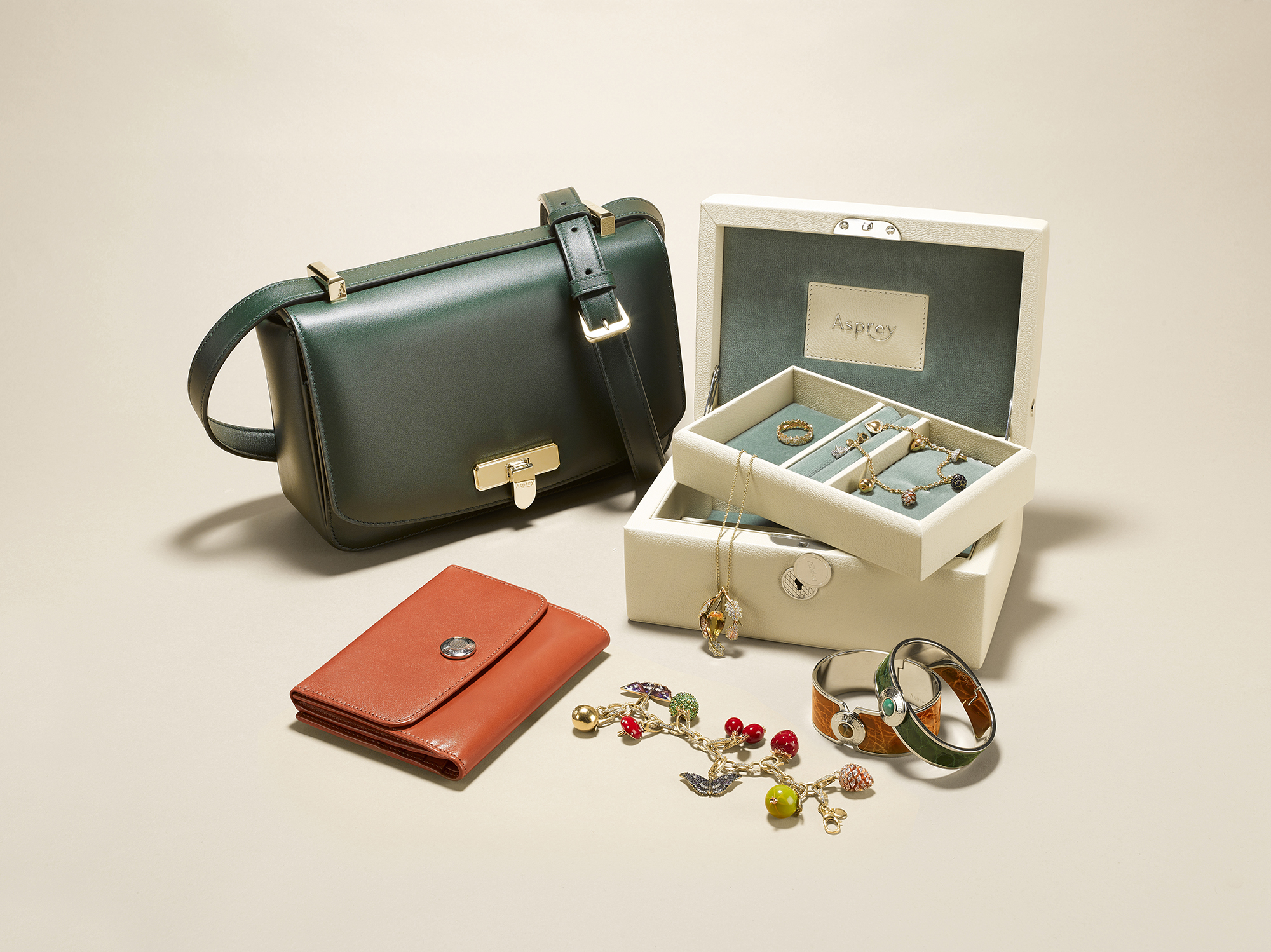
Macro photography is where premium brands separate themselves from accessible brands visually.
Two products at the same price point can look identical in standard product photography. The customer cannot tell from the hero shot which one is the £40 piece and which is the £200. The macro layer is where the difference becomes visible. The stitching, the finish, the material grain, the construction detail, the small craft choices that justify the higher price.
This guide is for brands whose commercial proposition involves visible craft and quality at close range. It is about what macro photography actually delivers commercially, the technical capability the work requires, and where to invest in macro alongside standard product photography.
Why macro work matters commercially
A standard product photograph shows the customer what the product is. A macro photograph shows them what the product is made of.
For brands competing on craft, material quality, finish, or construction, the macro layer is where the commercial argument lives.
Premium beauty brands use macro to show texture, finish, and formulation quality.
Luxury watch brands use macro to show dial detail, finishing, and bracelet construction.
Heritage fashion brands use macro to show stitching, weaving, hardware, and construction.
Jewellery brands use macro to show stone clarity, setting work, and metal finishing.
Premium drinks brands use macro to show liquid behaviour, bubble structure, and packaging detail.
Independent designer brands use macro to show the handwork and craft that justifies their price points.
In each category, brands that ship without macro work undersell against competitors that include it.
Where macros earn their place
Not every product or every asset matrix needs significant macro work.
The categories where macro investment pays back:
Hero pieces in any premium range. The flagship products that anchor the brand’s commercial story.
Pieces where construction or finish is the differentiator. Hand-stitched leather, finely-finished metalwork, complex stone settings.
Pieces where material is the brand promise. Premium fabrics, distinctive leathers, specific yarn or metal compositions.
Pieces where the brand is competing on craft. Where the commercial proposition is the maker’s skill rather than the design alone.
Pieces with technical complexity. Watches with notable movements, jewellery with complex settings, garments with distinctive construction.
The categories where macro investment usually does not pay back:
Commodity or accessible-price-point products. Where the commercial proposition is price rather than craft.
Pure design-led pieces. Where the brand’s selling point is shape or aesthetic rather than execution detail.
Pieces with simple construction. Where the finished product does not contain significant craft beyond design.
The brief should specify which pieces in the range warrant macro work and which do not. Distributing macro investment evenly across a catalogue often misallocates budget.
The technical capability for macro work
Macro photography is technically demanding in specific ways.
Macro lens capability. Dedicated macro lenses provide the close-focus capability and the optical character that close-in work requires. Standard product lenses cannot deliver the same results.
Working distance management. Macro work involves placing the camera close to the subject. The working distance affects the lighting setup, the camera position, and the composition. Studios with macro capability have the equipment and the technique to manage this.
Depth of field control. Macro work has very shallow depth of field at high magnifications. The focal point selection and the aperture choice are critical decisions that affect what reads sharply.
Focus stacking for extended depth. Some macro compositions require combining multiple captures at different focal points to achieve the depth of sharpness the brand needs. Focus stacking is a specialist technique that studios may or may not support.
Lighting in tight spaces. Macro work often requires lighting in restricted physical spaces. Specialist lighting equipment, including small softboxes and angled flash systems, supports this.
Vibration management. At macro magnifications, tiny vibrations affect the captured image. Heavy tripods, mirror lock-up, and remote triggers all become part of the technique.
A specialist studio working on macro maintains all six capabilities. A generalist studio sometimes has macro equipment but not the working technique to use it consistently.
The composition decisions in macro
Macro compositions have specific conventions that distinguish them from standard product work.
The focal point selection. What reads sharply in the frame. The point where the customer’s eye lands. The focal point selection often defines the composition.
The negative space management. Macro compositions often include significant out-of-focus area. The character of this out-of-focus space affects the overall composition.
The scale information. Macro shots can lose scale information entirely. Some compositions deliberately preserve scale references; others abandon scale entirely for aesthetic reasons.
The relationship to the wider product. Macros that include enough context for the viewer to understand where the macro sits in the wider product versus macros that abstract the detail entirely.
The lighting that reveals what the macro is showing. The lighting choice has to serve the specific detail being captured rather than the wider product.
These compositional choices distinguish strong macro photography from technically competent but commercially weak macro work.
The asset matrix for macro-inclusive shoots
A typical asset matrix for a shoot that includes significant macro work:
Standard product photography per piece. Hero, supporting angles, detail at standard magnification.
Hero macros for flagship pieces. Three to five macro compositions per flagship piece, each revealing a specific commercial detail.
Material and finish macros. Close-in shots of the material, finish, or construction that the brand markets specifically.
Comparison macros where applicable. Where the brand’s craft is distinguished from competitors through specific construction choices, comparison macros support the marketing argument.
Context macros that bridge product and detail. Macros that include enough of the wider product to maintain visual continuity with the standard photography.
For a launch focused on craft and material, the macro layer often represents 20 to 40 percent of the total asset matrix.
When macro alone is the brief
Some commissions are entirely macro-led.
Editorial press features on specific brand craft. Magazines covering a brand’s distinctive construction often want imagery focused entirely on the craft detail.
Brand storytelling content. Behind-the-scenes content showing the craft process or the finished pieces in close detail.
Product technology marketing. Brands marketing specific technical features (watch movements, beauty formulation visualisation, technical fabric construction).
Comparison and selection content. Brands creating educational content about their product category often need extensive macro work.
Auction and high-value listing imagery. Where the listing’s commercial value depends on documenting the piece at close range.
For these commissions, the production focuses entirely on macro work, often across one to three days depending on the asset volume.
Production approach for macro shoots
The production day for macro-focused work:
Slower pace per shot. Macro work cannot be rushed. Each composition involves careful camera placement, lighting calibration, focus selection, and capture. Plan 30 to 90 minutes per macro composition rather than 5 to 15 for standard work.
Extended sample handling. Pieces being macro photographed receive significant handling. Care protocols accommodate this.
Multiple takes per composition. Macro work often requires multiple attempts to achieve the focus and the lighting precisely. The team plans for iteration.
Real-time review at high resolution. Macro work is reviewed on screen at significant zoom level during capture. The team can catch issues at the time of shooting.
Specialist retouch time. Macro work often involves focus stacking assembly, fine surface clean-up, and detail preservation that takes more retouch time than standard product photography.
Specific lighting variation across the day. Different macro subjects often need different lighting. The day may include multiple distinct lighting setups.
Briefing notes for macro shoots
The strongest briefs we receive for macro-inclusive or macro-led work:
The piece list with the specific details to macro per piece. The asset matrix split by standard product photography and macro work. The brand’s existing macro references for tonal consistency. The intended use of each macro asset (PDP deep-scroll, press distribution, editorial content, brand storytelling). Sample handling logistics including the additional care macro work requires.
What does not need to be in the brief: lighting instructions or attempts to specify the technical setup. Those are the studio’s decisions.
If you are scoping photography that includes significant macro work in London, share the piece list and the specific craft or material details to highlight and we will plan the production around the close-in work. We work across beauty textures, product photography, and creative photography at the Bankside studio.
Share your brief. We will come back the same day.