

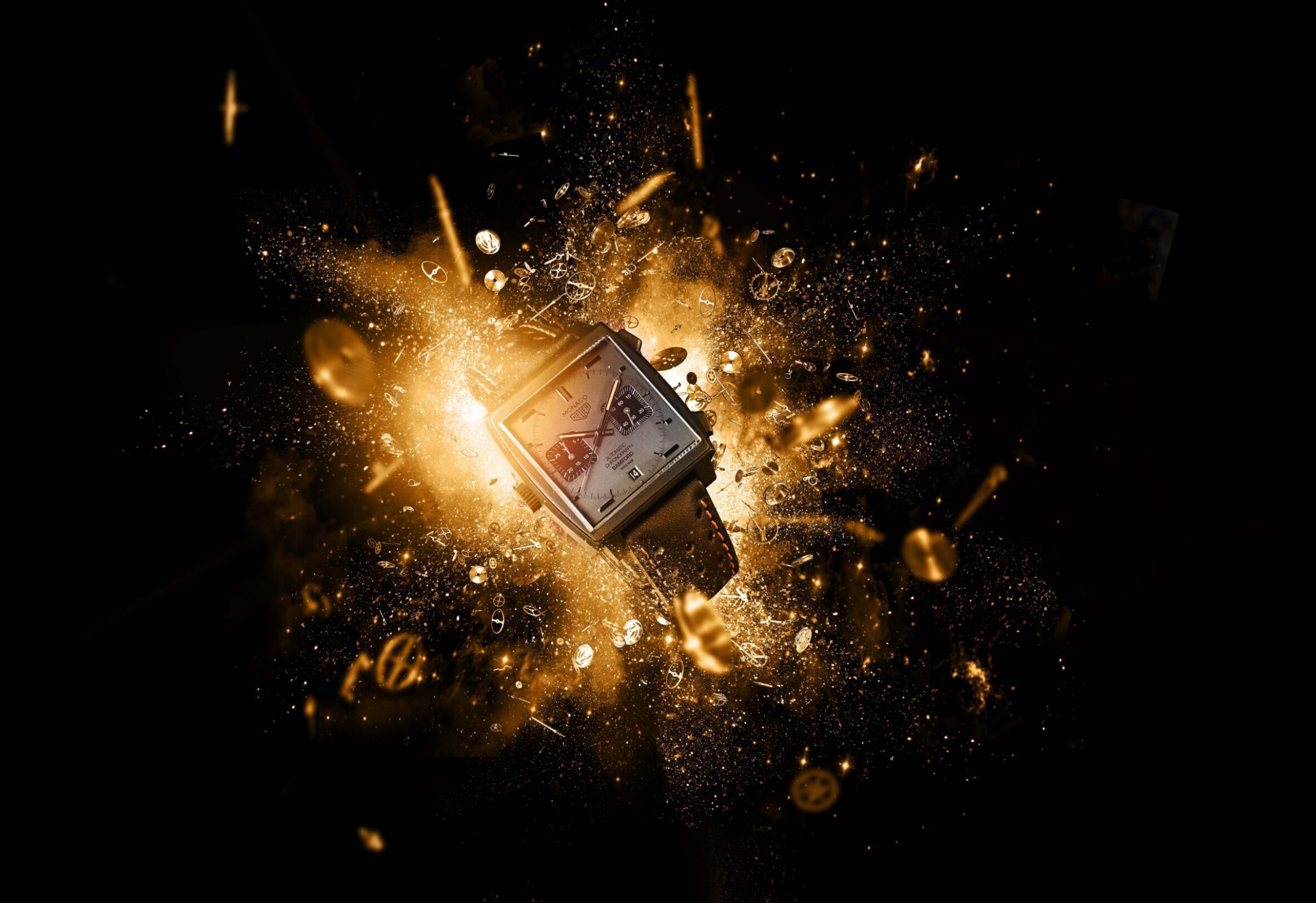
Vintage watch photography is its own discipline within watch photography, with conventions that collectors recognise immediately and that generalist studios consistently miss.
A vintage Rolex Submariner photographed like a new watch undersells its character. A patinated Patek Philippe Calatrava shot with cleanup retouch misrepresents the piece. A military-issue Omega without the case-back markings clearly visible loses the provenance that justifies the price.
This guide is for dealers, auction houses, and brand teams managing vintage watch sales who commission photography in London. It is about the specific conventions vintage watch photography follows, and what to brief differently from new watch work.
What collectors look at first
Vintage watch collectors evaluate pieces against a different set of priorities than new watch buyers.
Authenticity markers. Reference numbers, serial numbers, case-back stamps, dial signatures, movement caliber numbers, hallmarks. The first thing a serious collector wants to verify is that the piece is what the seller says it is.
Originality. Whether the dial, hands, crown, bezel, bracelet, and movement are original to the piece or have been replaced. Replacement parts (often called “service parts”) affect value significantly. The photography should make originality visible.
Condition. The state of the case, the dial, the bracelet, the crystal. Honest condition photography is more valuable than flattering condition photography; the collector who arrives expecting one condition and finds another walks away.
Patina. Age-related changes that have happened naturally over time. Lume that has turned cream or pumpkin, dial colours that have shifted, case surfaces that have softened. For many vintage pieces, patina is part of the value rather than a defect to retouch away.
Provenance. The piece’s history. Original papers, original box, service records, previous ownership documentation. Photography that captures the supporting materials alongside the watch extends the provenance story.
A photographer working on vintage pieces who does not understand these priorities produces imagery that may look beautiful but fails commercially.
Capturing authenticity markers
The authenticity markers that vintage watch photography must capture:
Case-back details. Reference number, serial number, original engravings, military markings, any later service marks. Often photographed at high magnification with raking light to reveal the engraving depth.
Dial signature and detail. The brand signature, the model name, any depth markers, dial codes, applied indices, and the relationship between dial elements. Particularly important for pieces where dial variations significantly affect value.
Movement markings. The caliber number, serial number, the bridge engravings, any service marks, any modifications. For pieces with display casebacks, this is straightforward; for pieces with solid casebacks, the photography may require movement removal (with appropriate handling).
Crown and crown signature. Replacement crowns are common on vintage pieces. Original-marked crowns are part of the originality story.
Bracelet end-link references. End-links on vintage Rolex and similar pieces often carry reference markings that signal originality. The photography should capture these.
Hallmarks and import marks. For pieces sold into specific markets, the hallmarks and import marks are part of the provenance. Vintage pieces often have multiple market markings accumulated over their life.
A specialist vintage watch studio includes all six categories in the asset matrix for a hero piece. A generalist studio often captures the dial and the case-back at standard resolution and considers the work done.
Photographing patina honestly
Patina is the most photographically demanding aspect of vintage watch work.
The temptation is to retouch the patina away, to present the piece as cleaner than it is. This is sometimes done for new-old-stock pieces being marketed as if they were new, but for genuine vintage pieces the retouching is counterproductive.
Patina-honest photography:
Lighting that reveals patina without exaggerating it. Side-lighting often shows surface variation cleanly. Direct light from the front can flatten patina or push it toward harsh contrast.
Colour fidelity that matches the actual piece. Lume that has turned cream should photograph as cream, not as artificial bright lume. Dial colours that have shifted from black to grey, or from white to yellow, should be captured honestly.
Composition that respects patina as character. A patinated dial captured in a way that makes the patina part of the composition reads as confidence in the piece’s authenticity. The same dial captured in a way that minimises the patina reads as defensive.
Detail captures that show patina up close. For pieces with collector-significant patina, dedicated macros that show the surface in detail support the listing’s authenticity argument.
Collectors trust photography that shows patina honestly. They distrust photography that appears to hide or improve it.
Condition documentation
Condition documentation is the backbone of credible vintage watch listings.
Case condition. Polishing history (over-polished cases lose value), edge sharpness, lug width and original geometry, surface scratches, any signs of repair.
Dial condition. Mark-free or marked, original lume or relumed, any spotting or discolouration beyond expected patina, any restoration history.
Bracelet condition. Stretch, end-link wear, clasp condition, polishing state, original or service-replaced links.
Crystal condition. Original acrylic, replacement acrylic, sapphire upgrade, any chips or scratches, any cyclops modification.
Movement condition. Service history, any modifications, recent restoration, working condition.
The asset matrix for a vintage piece should include dedicated shots for each of these condition categories. The dealer or auction house listing then has the photographic evidence to support the written condition description.
For high-value vintage pieces, video walkaround content that shows the case from all angles in motion can supplement the static photography.
The provenance package
Where the piece has provenance materials (original box, original papers, service records, original receipts, accompanying documentation), the photography should capture these alongside the watch itself.
The box. Original boxes for vintage pieces are often as valuable as the watch in collector terms. The photography should capture the box’s condition, any original branding, any age-appropriate wear.
The papers. Original warranty cards, certificates of authenticity, service records. Photographed clearly so the text is legible at the resolution used in the listing.
The receipt or original purchase document. Where present, the original sales document is part of the provenance story.
Service history. Service records or workshop documentation that supports the piece’s ownership and maintenance history.
A vintage watch presented with full provenance documentation through photography reads as a different listing from the same piece presented without. The asset matrix should reflect the provenance materials available.
Production approach for vintage shoots
The production approach for vintage watch work differs from new watch work.
Slower pace. Vintage pieces deserve more capture time per shot. The macros, the condition details, the provenance documentation all add to the per-piece time investment.
Careful handling protocols. Vintage pieces are often irreplaceable. The studio’s handling, transit, and storage protocols should be appropriate for high-value, often unique pieces.
Lighting calibrated to material age. Lighting that flatters new metal often misreads aged metal. The studio should calibrate to the specific piece’s surface character.
Retouch discipline that preserves character. The retoucher should be briefed to preserve patina, surface variation, and age-appropriate character rather than to clean toward a new-watch standard.
Coordination with the dealer or auction house. Vintage photography often supports a specific listing or sale. The asset matrix should align to the listing requirements (auction catalogue specs, dealer website conventions, marketplace platform requirements).
For high-value pieces, on-site photography at the dealer’s premises or the auction house may be required to avoid transit risk. A specialist studio with mobile production capability can accommodate this.
Briefing notes for vintage watch shoots
The strongest briefs we receive for vintage watch photography include:
The piece details including reference, year of manufacture, known service history, and any specific provenance materials. The intended use (auction listing, dealer marketing, collector publication). The condition description that the photography should support. Any specific authenticity markers the listing will highlight. Sample handling logistics, including transit, insurance, and on-site versus studio production.
What does not need to be in the brief: lighting instructions or attempts to specify the production technically. Those are the studio’s decisions.
If you are a dealer, auction house, or brand managing vintage watch sales and commissioning photography in London, share the piece details and the listing context and we will plan the production around the commercial use. We work across watch photography and watch photography London at the Bankside studio.
Share your brief. We will come back the same day.