

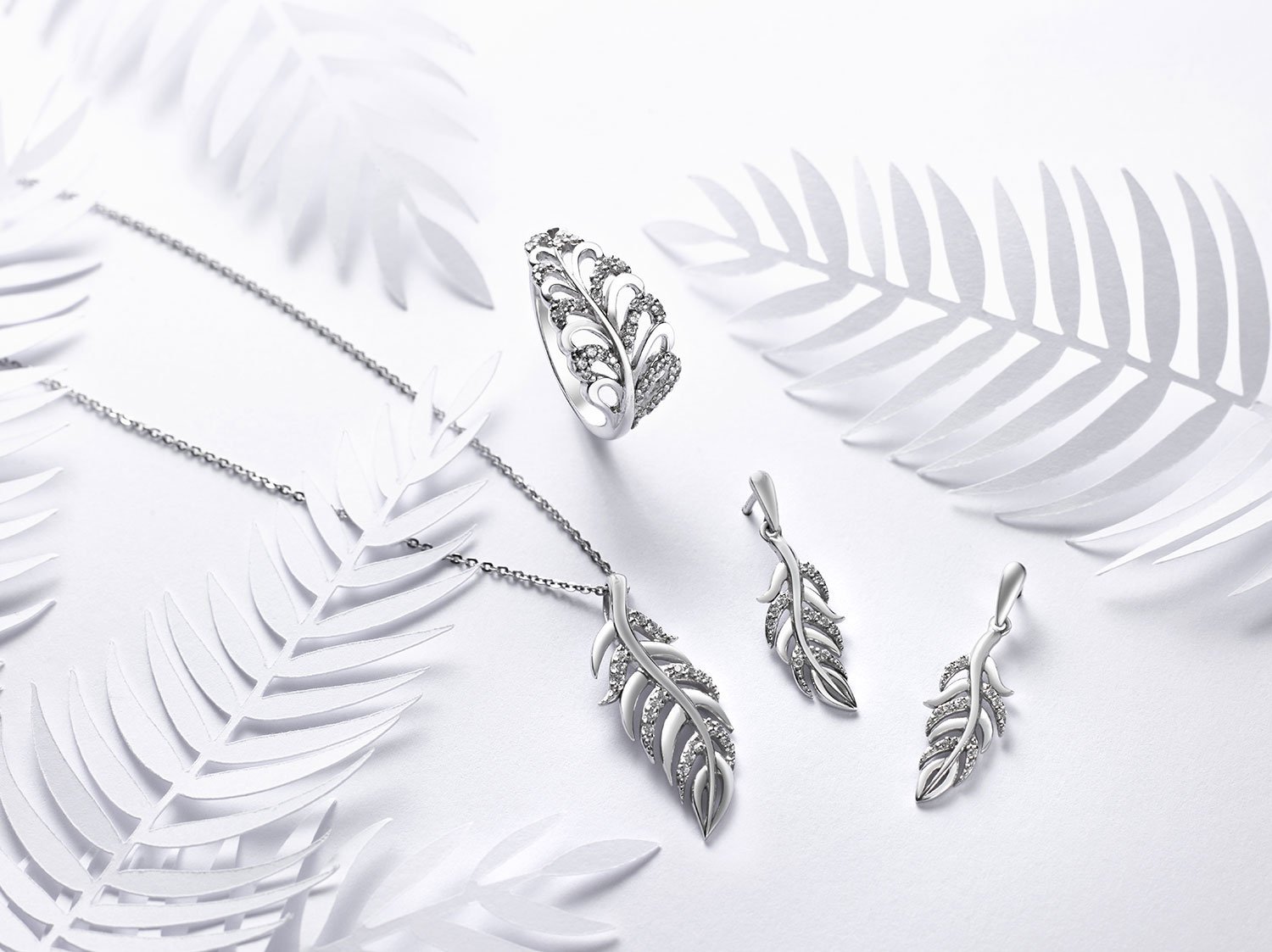
Some jewellery is designed to be photographed on skin. Some loses its commercial proposition without that context.
A delicate necklace photographed flat against a background communicates almost nothing about how it will look at the throat. A pair of statement earrings shown in isolation cannot communicate the way they catch the light against the face. A stack of bracelets shot flat lays out the construction but loses the way they layer and move on a wrist.
This guide is for jewellery brands and retailers commissioning lifestyle and skin-based photography in London. It is about what skin-based jewellery imagery delivers commercially, how the production differs from standalone product work, and what to brief differently.
When the piece needs to be on skin
Some jewellery categories communicate their commercial proposition primarily through worn imagery.
Delicate or fine pieces. Thin chains, fine bracelets, small earrings, minimalist rings. The scale and the visual presence of the piece are difficult to judge in isolation. Worn imagery resolves this.
Layering-led pieces. Necklace stacks, earring stacks, bracelet stacks, ring stacks. The piece is designed to combine with others, and the photography should reflect the combination.
Body-conscious or anatomical pieces. Pieces that wrap, drape, or follow body geometry (collar necklaces, ear cuffs, body chains, hand jewellery). The piece’s relationship to the body is the commercial proposition.
Movement-dependent pieces. Pieces with movement (chandelier earrings, drop necklaces, fringe pieces, kinetic elements). Static product photography flattens what wearing reveals.
Texture-against-skin pieces. Pieces where the contrast between metal and skin is part of the visual appeal (cuffs, statement collars, sculptural pieces).
For these categories, lifestyle imagery is not supplementary to the PDP work; it is essential.
The skin choice
Skin tone is part of the photograph’s commercial decision.
The brand’s customer often relates more readily to imagery showing skin tones similar to their own. Brands serving diverse customer bases benefit from showing diverse skin in their imagery. Brands serving narrower customer profiles can be more focused but should consider whether their skin choices align with the actual customer they want to reach.
The casting choices that work:
Multiple skin tones across the asset matrix. Even for brands with a single dominant customer profile, including variation signals inclusivity and broadens appeal.
Model casting that matches the brand’s customer. Skin tone, age, body type that the brand’s actual buyer relates to.
Diverse styling around the pieces. Different hair, makeup, and clothing styling across the imagery shows the pieces in multiple contexts.
Hand and body model considerations. For pieces worn on hands, wrists, or other specific body parts, the model’s specific characteristics matter. Hand age, finger length, nail style, wrist size all read in the imagery.
Authentic representation. The skin choice should look natural and considered rather than tokenistic. Stock-diverse casting that does not feel authentic reads worse than a smaller but more genuine cast.
A specialist studio with a model network can advise on casting that matches the brand’s positioning.
Lighting skin and metal together
Jewellery on skin presents specific lighting challenges.
Skin tone fidelity. Skin needs to read as natural. Mixed lighting temperatures, harsh shadow, or over-exposed highlights all compromise skin colour.
Metal character preservation. The metal in the piece needs to read with its intended character. Polished metal reads as polished, brushed as brushed, matte as matte.
The interaction zone. Where the metal sits against the skin, the lighting has to serve both surfaces. Light that flatters skin sometimes loses metal detail. Light that reveals metal sometimes flattens skin.
Stone behaviour on skin. Where pieces include stones, the stone’s brilliance against skin is different from its brilliance against a clean background. The composition has to accommodate the different lighting requirements.
Shadow that reads natural. Skin produces natural shadow that differs from product photography’s controlled shadow. The lighting should respect skin’s natural shadow rather than fight it.
A specialist studio working on skin-based jewellery uses calibrated lighting that handles both surfaces simultaneously. The lighting setup is often more complex than for pure product photography.
The pose and movement question
Static posed jewellery photography is different from dynamic captured jewellery photography.
Static posed. The model holds a specific position. The composition is controlled. The piece is captured in its intended display position. Suitable for product-led PDP imagery where the customer needs to evaluate the piece.
Dynamic captured. The model moves naturally and the photographer captures specific moments. The piece is shown in motion or in transition. Suitable for editorial campaign work where the brand wants energy and life.
Hand action. For ring and bracelet photography, the hand engaged in a specific action (writing, holding a cup, lifting an object) often produces more compelling imagery than the static pose.
Implied movement. Even in static photography, the model’s pose can suggest movement or rest. The choice reads in the final imagery.
Brands typically use both registers across the asset matrix. Static for PDP, dynamic for campaign, hand action for specific categories.
The composition conventions
Skin-based jewellery photography has its own compositional conventions.
Close-in framing. Often tighter than non-skin product photography. The piece sits prominently in the frame with skin and immediate context around it.
Body part as composition element. The neck, the wrist, the hand, the ear. Each becomes a compositional element in its own right.
Negative space against skin. Skin provides natural negative space that allows the piece to read clearly. Compositions exploit this.
Lighting that creates depth. Light from a specific direction creates skin texture and shadow that gives the composition three-dimensional presence.
Implied wearer beyond the visible body. The customer projects themselves into the imagery. The composition leaves room for that projection.
These compositional choices are specific to skin-based work. A studio briefed for the work understands them.
Production approach for skin-based shoots
The production day for skin-based jewellery photography:
Model coordination as part of the production planning. Model booking, fitting where appropriate, hair and makeup, styling. The model side of the production has its own logistics.
Hair and makeup coordination. Skin-based photography often involves hair and makeup decisions that affect the imagery. Hair styling that frames the ear for earring shots. Makeup that complements the metal tones. These details warrant pre-production planning.
Wardrobe and styling. What the model is wearing (or not wearing) around the jewellery affects the photograph. Bare skin, fabric drape, complementary clothing. The styling choices are part of the brief.
Hand model coordination where needed. For pieces worn on hands, often a separate hand model with specific characteristics is booked alongside the body model.
Sample care across model handling. Pieces being worn by models receive more handling than pieces shot in isolation. The sample care protocols accommodate this.
Block-structured day. Often the production day blocks the model and jewellery interactions in dedicated sessions, with hair and makeup adjustments between blocks.
The asset matrix for skin-based work
A typical asset matrix for a skin-based jewellery shoot:
Hero on-model compositions. Three to five lead images showing the pieces worn in their primary contexts.
Detail close-ups on skin. Close-in macros of pieces against skin, showing the intimate detail.
Layering and stacking compositions. Where pieces are designed to combine, compositions showing the combinations.
Hand-specific imagery for rings and bracelets. Action shots and detail macros for hand-worn pieces.
Ear-specific imagery for earrings and ear cuffs. Close-in compositions showing the pieces in their ear context.
Body-conscious compositions for pieces with anatomical relationships. Collar necklaces, body chains, sculptural pieces.
Movement compositions for pieces with kinetic appeal. Implied or captured movement showing the piece in action.
For a launch focused on skin-based pieces, the on-model imagery often dominates the asset matrix at 60 to 80 percent of the total deliverables, with pure product photography as supporting work.
Briefing notes for skin-based jewellery shoots
The strongest briefs we receive for skin-based jewellery work:
The piece list with the categories of skin engagement per piece (neck, wrist, ear, hand, body). The model and hand casting direction. The asset matrix split by on-model versus pure product. The hair, makeup, and styling direction. The brand’s existing skin-based imagery references. Sample handling logistics including model interactions.
What does not need to be in the brief: lighting instructions or attempts to specify the technical setup. Those are the studio’s decisions.
If you are scoping skin-based jewellery photography in London, share the piece list and the model direction and we will plan the production around the worn imagery. We work across jewellery photography and beauty photography at the Bankside studio.
Share your brief. We will come back the same day.