

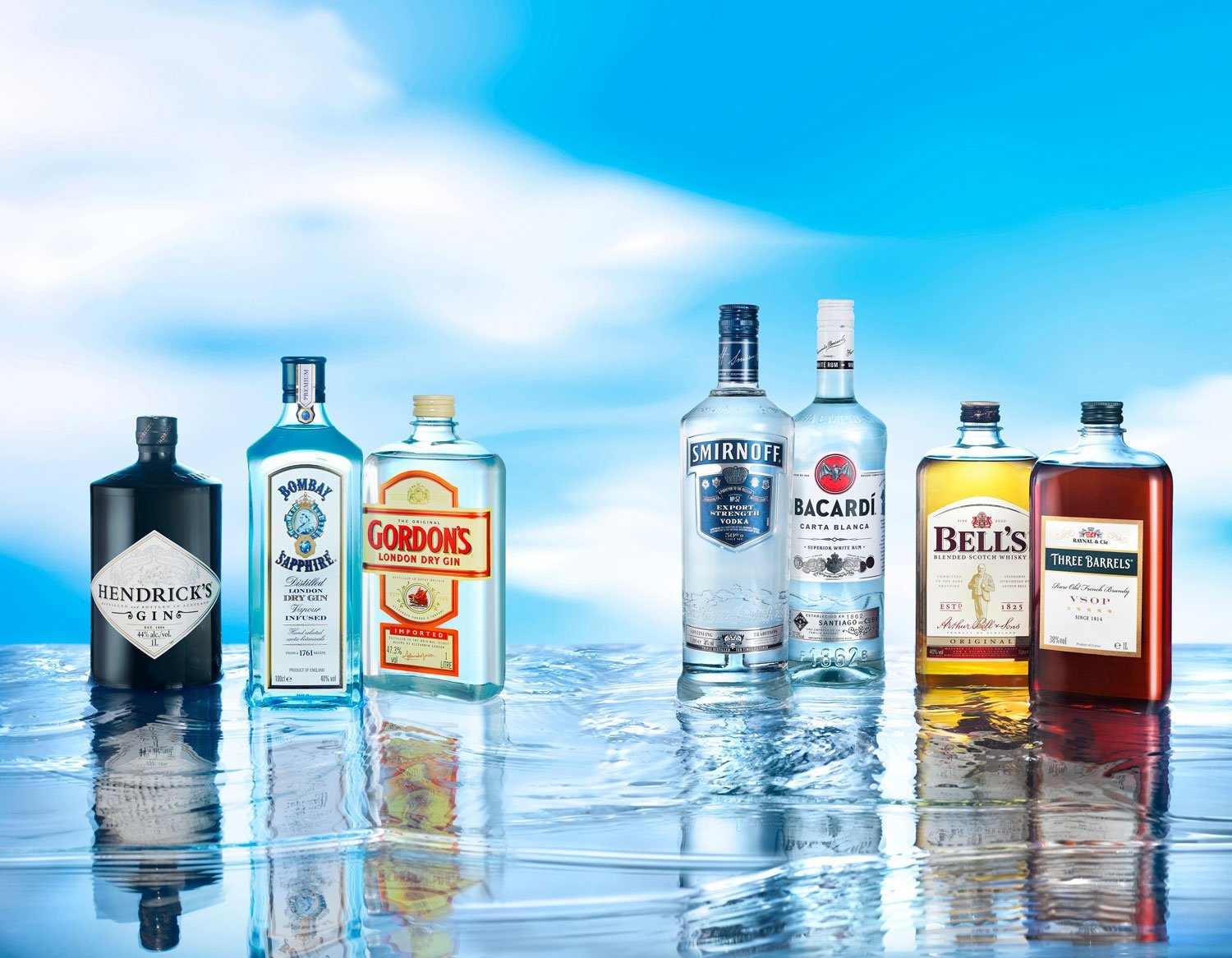
Spirits photography sits at the intersection of product photography, lifestyle imagery, and brand storytelling.
A bottle on a clean background tells the customer what the spirit looks like. A cocktail in lifestyle context tells them what it feels like to drink it. Brand storytelling imagery (the distillery, the maker, the heritage) tells them why the spirit exists. Strong spirits brands invest in all three layers, recognising that each does different commercial work.
This guide is for spirits brand teams commissioning photography in London. It is about how the asset matrix should span product, cocktail, and storytelling, what each layer does commercially, and what to brief differently from other drinks categories.
What spirits photography does that other drinks photography does not
Spirits brands sell on multiple commercial signals that other drinks categories rely on less.
Heritage and provenance. Whisky, cognac, rum, gin, and other premium spirits often trade on origin stories, distillery heritage, and craft narratives that the photography supports.
Premium positioning. Spirits typically command higher price points than beer, soft drinks, or wine in supermarket terms. The photography has to justify the price visibility.
Cocktail culture context. Most spirits are consumed in mixed-drink contexts. The cocktail layer is part of the brand’s lifestyle proposition.
Bottle and packaging design. Premium spirits invest significantly in bottle design. The bottle is part of the visible brand on shelf and at home.
Long-form brand storytelling. Premium spirits often run campaigns built around the brand’s story rather than the product alone. The storytelling imagery is part of the marketing infrastructure.
A spirits brand’s photography commission should anticipate all five. A brief that addresses only one or two undersells the brand.
The bottle hero work
The bottle hero is the foundational asset for any spirits brand.
Premium spirits bottle photography demands:
Glass clarity that reveals the spirit colour. Whisky’s amber, gin’s clear, rum’s dark, vodka’s pure. The colour visible through the glass is part of the bottle’s commercial identity.
Label legibility. Spirits labels carry significant information (age statements, denomination of origin, distillery markers, vintage). The label has to read clearly at the photograph’s display size.
Bottle character. Sculpted bottle forms, embossed details, neck and shoulder treatment, base character. Premium spirits often have distinctive bottle architecture that the photography should respect.
Closure detail. Cork, screw cap, wax seal, branded closure. The closure is often part of the bottle’s premium signal.
Foil and capsule treatment. The wrapping around the bottle neck is part of the visual brand. Reflective foil, branded capsules, wax-dipped finishes each have their own lighting demands.
Lighting that supports premium positioning. Spirits trade on premium feel. The lighting should be calibrated for the price point rather than for commodity reading.
A specialist drinks studio working on spirits maintains lighting setups specifically for bottle photography. A generalist studio sometimes applies general product lighting that misses the spirits-specific commercial signals.
The cocktail and serve photography
Cocktail and serve photography extends the bottle into use context.
The cocktail layer typically includes:
Hero serve photography. The brand’s signature serve presented properly. Often a classic cocktail the brand is associated with, photographed against an appropriate setting.
Variation serves. Multiple cocktail or serve options using the brand’s spirit. Supports the brand’s recipe content and the customer’s exploration.
Build sequence imagery. Step-by-step cocktail build photography for content marketing and brand storytelling.
Pour and finish imagery. The moment of pouring, the cocktail finished and ready. Captures the brand’s experiential moment.
Garnish and presentation. The detail of how the cocktail is presented, including garnish treatment and glassware choice.
Ice and dilution imagery. Particularly for whisky and brown spirits, the way ice and dilution interact with the drink.
Each requires specific food and drink photography craft. The temperature management, the freshness of garnish, the cocktail building timing, the glassware choice. A specialist studio with cocktail photography capability handles these. A studio without it produces serve imagery that reads as static product work.
The brand storytelling layer
Premium spirits brands invest heavily in storytelling content.
The storytelling layer includes:
Distillery and production imagery. Where the spirit is made. The stills, the warehouses, the casks, the production process. Often photographed at the actual distillery on location.
Maker and craft imagery. The people who make the spirit. The master distiller, the blender, the production team. Often photographed in their working context.
Heritage and history visuals. Archives, historic photography, signage, original branding materials. Supports brands with significant history.
Provenance and origin imagery. The landscape, the water source, the local context that the spirit comes from. For brands trading on origin (Scotch from a specific region, agave from a specific Mexican area), this imagery is commercial.
Aging and maturation visuals. Cask warehouses, barrels, the maturation process. For spirits where aging is part of the value, the visual story matters.
Brand world imagery. The lifestyle context the brand positions itself within. Refined occasions, casual moments, the contexts the brand wants its drink to inhabit.
The storytelling layer often involves location work alongside studio production. A specialist studio with location capability can coordinate both.
Production approach for spirits brands
The production day for spirits photography combines product, cocktail, and storytelling work.
Bottle hero block. Studio capture of the bottle in its primary presentations. Multiple angles, label macros, closure detail, foil and capsule work.
Cocktail and serve block. Studio capture of the brand’s signature serves and supporting cocktails. Often involves a stylist or food and drink specialist on set.
Brand context block. Either studio set construction supporting the brand’s positioning, or location work at the distillery, the warehouse, or the brand’s preferred lifestyle contexts.
Lifestyle and editorial block. Hero imagery for campaign and editorial use, often drawing on the storytelling layer.
For a coordinated production, the bottle and cocktail work happens at the studio across one to two days, with brand storytelling and location work as separate productions where required.
Retailer and distribution photography
Spirits brands sell through multiple retail channels with specific photography needs.
Supermarket and off-trade. Tesco, Sainsbury’s, Morrisons, Asda, Waitrose. Each has its own PDP image conventions. Bottle photography against clean backgrounds with consistent presentation across the brand’s range.
Specialist spirits retailers. Master of Malt, The Whisky Exchange, Hedonism Wines, Selfridges spirits, premium independent merchants. Often accommodating richer imagery, including brand context and tasting notes integration.
On-trade photography. Pubs, bars, restaurants, hotels. Imagery used by the on-trade for menu boards, bar back posters, point-of-sale materials.
Duty-free and travel retail. Airports, ferries, cross-channel routes. Often requires specific imagery for the duty-free presentation context.
Direct-to-consumer through the brand’s own site. Full creative latitude, supporting the brand’s storytelling alongside the commercial PDP work.
A spirits launch shipping to multiple channels benefits from asset matrix planning that anticipates each channel’s specific needs.
The asset matrix for a spirits brand launch
A typical asset matrix for a UK spirits brand launch:
Bottle photography. Hero composition, multiple angles, label macros, closure detail, foil and capsule work. Twenty to thirty assets for hero bottle coverage.
Variant and range coverage. Where the brand has multiple expressions (different ages, finishes, limited editions), each variant photographed with consistent treatment.
Cocktail and serve photography. Signature serves, variation serves, glassware presentations. Fifteen to twenty-five cocktail assets.
Lifestyle and brand context imagery. Drinking moments, social contexts, brand world imagery. Ten to twenty lifestyle assets.
Brand storytelling imagery. Distillery, production, maker, heritage. Variable count depending on the brand’s storytelling depth.
Retailer-specific assets. PDP imagery to each retailer’s specification.
Press and editorial selects. High-resolution editorial heroes plus detail captures for press distribution.
Social and digital assets. Native vertical, square, and motion content for the brand’s social presence.
For a typical premium spirits launch, the total deliverable count lands at 100 to 200 assets, often captured across two production days plus optional location work.
Briefing notes for spirits shoots
The strongest briefs we receive for spirits photography:
The bottle and variant range. The signature serves and cocktail vocabulary. The brand storytelling elements to support. The retailer and distribution mix. The brand’s existing visual register references. Sample handling and licensing logistics.
What does not need to be in the brief: detailed lighting instructions or attempts to specify the production technically. Those are the studio’s decisions.
If you are commissioning photography for a UK spirits brand launch in London, share the brand context and the launch scope and we will plan the production across bottle, cocktail, and brand storytelling. We work across drinks photography, product photography, and creative photography at the Bankside studio.
Share your brief. We will come back the same day.