

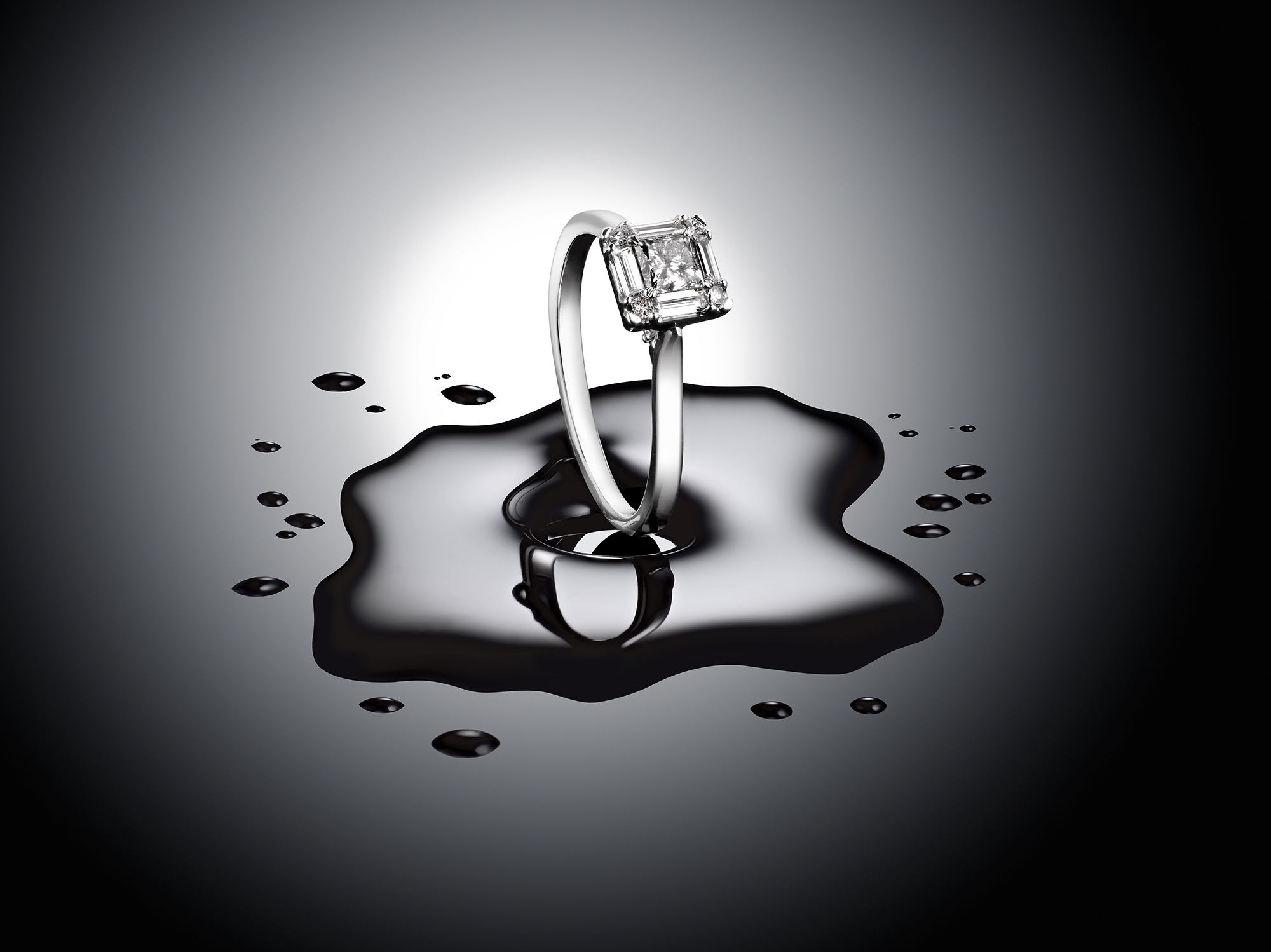
Jewellery is one of the highest-margin categories in online retail and one of the most demanding for photography.
The buyer cannot touch the piece. They cannot try it on. They cannot weigh it in their hand or feel the metal against their skin. Every reassurance the customer would normally get from physical interaction has to be delivered through the photography. A weak PDP loses the sale. A strong PDP can support purchases at price points that would seem unlikely without the imagery.
This guide is for jewellery brands and retailers scoping e-commerce photography in London. It is about how the asset matrix should be structured to support the online buying decision, where lifestyle imagery earns its place, and what to brief differently from general product e-commerce.
What the online jewellery buyer actually needs
The customer evaluating jewellery online is asking specific silent questions before any aesthetic ones.
Is the stone honest? For pieces with stones, the customer wants to verify clarity, colour, and brilliance. Photography that overstates these qualities loses customers at the point of delivery.
How big is it actually? Without physical handling, scale is the question customers most frequently get wrong. The photography has to communicate scale through deliberate composition or reference.
How does it look worn? For pieces designed to be worn (rings, necklaces, earrings, bracelets), the customer wants to see how the piece sits on a body before committing.
What is the quality of the metalwork? The setting, the clasp, the chain construction. Quality signals that the price is justified.
Will it look like the photograph when it arrives? Trust in the imagery is part of the purchase decision. Customers who have been disappointed by jewellery photography in the past are wary.
The PDP has to answer all five questions through the imagery. A PDP that answers two or three loses customers at the unanswered questions.
The PDP carousel structure for jewellery
The strongest jewellery PDP carousels follow a predictable sequence.
Image 1: Hero composition. The piece in its standard presentation. Often three-quarter angle or top-down depending on the piece type. Clean background, calibrated lighting, the piece reading at maximum clarity.
Image 2: Worn or scale-referenced composition. The piece on a model, on a hand, or alongside a scale reference. Resolves the scale question that pure product photography cannot.
Image 3: Detail or stone close-up. For pieces with featured stones, a close-in shot showing the stone’s clarity and setting. For metalwork pieces, a close-up of the construction detail.
Image 4: Side or alternative angle. Showing the piece from an angle that reveals depth, construction, or features the front composition cannot show.
Image 5: Back or reverse composition. Hallmarks, clasps, mountings, the back of the setting. Construction quality signals.
Image 6: Lifestyle or in-context. The piece in a lifestyle composition that suggests the wearing context (formal, daytime, occasion-specific).
Image 7 to 10: Additional angles, alternative styling, or feature-specific imagery. Filling out the carousel for premium pieces.
This sequence builds the customer’s confidence systematically. Brands shipping with three or four images typically convert at meaningfully lower rates than brands shipping with seven to ten.
Lifestyle and worn imagery for jewellery
Lifestyle imagery is often more important for jewellery than for most other product categories.
The customer needs to see how the piece sits when worn. A ring on a hand. A necklace at the throat. Earrings against the face. A bracelet on a wrist. Without this context, the customer is guessing about scale, proportion, and visual impact.
The lifestyle considerations:
Model casting that matches the brand’s customer. Hand and skin tone that the brand’s actual buyer relates to.
Multiple styling contexts where appropriate. Casual versus dressed, daytime versus evening. Brands serving multiple contexts benefit from showing them.
Composition that places the piece naturally. The worn shot should look like the customer might look in the piece, not like a styled editorial fantasy that the customer cannot see themselves in.
Lighting that flatters skin and metal together. Skin tones need natural warmth. Metal needs controlled lighting. Balancing both requires specific setups.
Hand and finger choices. For rings and bracelets, the hand and finger appearance matters. Some brands maintain a library of hand models with specific characteristics for their products.
A specialist jewellery studio invests in lifestyle imagery alongside the product work. The combined PDP performs significantly better than either alone.
Scale communication
Scale is the single most common point of customer disappointment with online jewellery purchases.
The photograph shows a piece that looks one size; the piece arrives at a different size. The customer either keeps the piece despite the mismatch or returns it. Either outcome erodes trust.
The strongest scale communication techniques:
A worn composition for any piece where wearing reveals scale. Ring on a hand. Necklace at the throat. Earring at the ear.
A scale reference for pieces shown in isolation. A measurement card, a hand without the piece on, a coin or familiar object placed in the composition.
Explicit dimension information in the listing copy. Carat weight, millimetre measurements, link sizes. The copy alongside the imagery removes scale ambiguity.
A piece in proportion within a styled composition. When the piece is shown alongside complementary objects, the relative sizing helps the customer judge.
A jewellery PDP that does not address scale is leaving customers to guess, and the guesses are often wrong in commercially damaging ways.
The detail and macro layer
Beyond hero and worn shots, jewellery PDPs benefit from detail and macro imagery.
The detail layer answers the questions the customer cannot get from the wide composition.
Stone detail. For pieces with stones, close-in shots of the stone showing clarity, cut, colour, and setting interaction. The most-zoomed images in jewellery PDP analytics are usually the stone macros.
Setting detail. The way the stone is held in the metal. Prong work, bezel settings, channel settings, pavé work. Each type of setting has its own photographic vocabulary.
Metalwork detail. For pieces where the metal is the commercial driver (chains, cuffs, ear cuffs, hardware-led pieces), the metalwork deserves dedicated photography.
Construction detail. Where the construction is part of the price point (Italian gold work, hand-fabricated pieces, specific weaving or chain construction), the construction deserves close-in shots.
Hallmark and signature detail. For luxury and heritage pieces, the hallmarks, the brand stamps, and any signature engraving are part of the authenticity story.
The macro layer adds depth to the PDP that the hero alone cannot. Customers who are seriously considering a piece zoom in. The PDP should reward the zoom.
Production approach for jewellery e-commerce
The production day for jewellery e-commerce work is structurally specific.
Capture-by-piece for hero work, capture-by-angle for variant work. Hero pieces get full attention in sequence. Variants of the same piece (different metal colours, different stone sizes) get captured against held lighting in batches.
Worn composition blocks scheduled separately. Model and stylist time is typically blocked into a dedicated session within the production day, with the product photography happening separately.
Lighting calibrated for jewellery specifically. The lighting for jewellery work is more demanding than for most product categories. Specialist studios maintain calibrated setups for diamond work, coloured stone work, pearl work, and metal-led pieces.
Retouch attention proportional to piece value. Hero pieces from a luxury commission warrant more retouch time than supporting pieces in a mass-market range. The retouch budget allocates accordingly.
Sample handling at high security level. Jewellery samples are often high-value, sometimes irreplaceable. The studio’s handling, transit, and on-set security should match.
Asset matrix for a jewellery e-commerce launch
A typical asset matrix for a jewellery e-commerce launch:
Hero per piece. The standard PDP lead image.
Three to five additional angles per piece. Showing the piece from multiple directions.
Two to four detail macros per hero piece. Stone, setting, metalwork, construction.
Worn composition per piece category. Ring worn, necklace worn, earring worn, bracelet worn. Multiple model and styling variations for hero pieces.
Scale reference image where the worn composition does not communicate scale fully.
Lifestyle or styled composition for campaign hero. Two to four images per launch supporting the broader marketing.
Hallmark and signature documentation for luxury or heritage pieces.
For a launch of ten to twenty pieces, the asset matrix typically lands at 100 to 200 deliverable images. A single well-planned production day or two-day production can deliver this.
Briefing notes for jewellery e-commerce shoots
The strongest briefs we receive for jewellery e-commerce work:
The piece list with materials, stones, settings, and any specific feature notes per piece. The model and styling direction for worn compositions. The asset matrix scoped across PDP, lifestyle, social, and marketing use. The brand’s existing visual register references. Sample handling logistics including security, transit, and any custodian requirements. The retailer mix and any retailer-specific requirements.
What does not need to be in the brief: lighting instructions or attempts to specify the production technically. Those are the studio’s decisions.
If you are scoping jewellery e-commerce photography in London, share the piece list and the channel mix and we will plan the production around the commercial use. We work across jewellery photography and e-commerce photography at the Bankside studio.
Share your brief. We will come back the same day.