

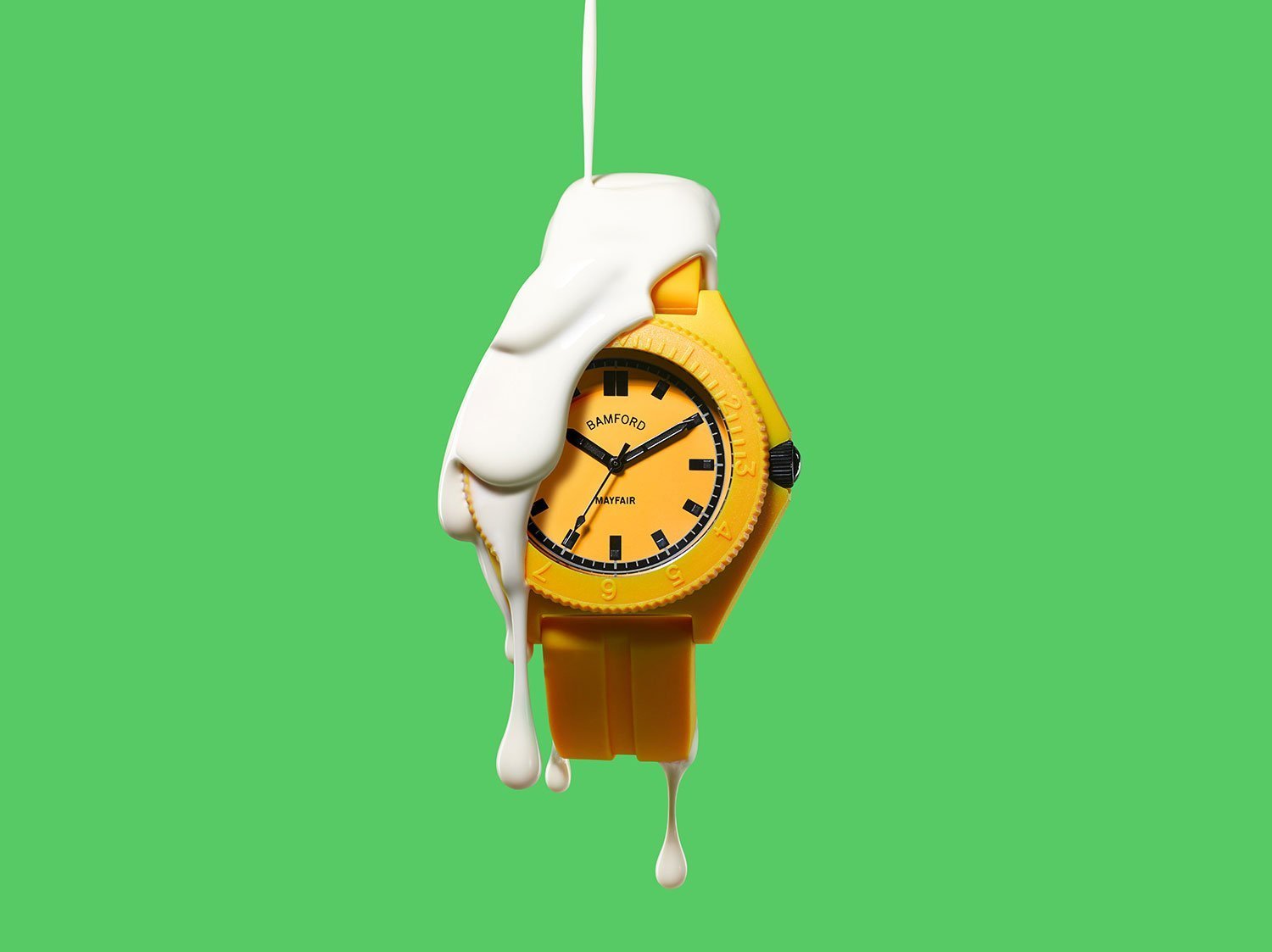
The watch alone is not the full product, and increasingly the photography needs to reflect that.
Modern watch buyers, particularly in the pre-owned and grey market, place significant value on the “full set” presentation: the watch with its original box, papers, accompanying documentation, and any included accessories. A watch sold as a full set commands a meaningful premium over the same watch sold loose, and the photography is often the difference between a buyer accepting the listing and walking away.
This guide is for watch brands, dealers, and auction houses commissioning full-set photography in London. It is about how to photograph the box, the papers, and the accompanying materials alongside the watch, and what to brief for resale and retail use.
Why full-set photography matters commercially
The “full set” concept has become central to watch valuation, particularly in pre-owned markets.
A watch with its original box and papers typically commands 10 to 25 percent more than the same watch sold loose. For high-value vintage pieces, the premium can be significantly higher. The buyer is paying for:
Authenticity verification. The original papers, the warranty card, the serial number alignment between the watch and the documentation. These materials confirm the piece is what the seller says it is.
Resale value preservation. The buyer knows that if they decide to sell the piece later, the complete set will command its own premium. The full set is a value-preserving asset.
Collector completeness. Many collectors value the experience of owning a complete original set. The box and papers are part of the ownership experience, not just paperwork.
Provenance documentation. For pieces with ownership history, the accompanying documentation extends the provenance story.
Listings without full-set imagery often lose buyers to listings that have it. The photography is part of the listing’s commercial proposition.
What the box deserves
The box is part of the brand’s identity and the customer’s first physical impression of the watch.
Brand-specific box design. Each brand has its own box conventions. Patek’s wooden boxes. Rolex’s distinctive presentation. Audemars Piguet’s premium leather and material work. The box’s character should read clearly in the photograph.
Box condition. For vintage and pre-owned pieces, the box’s condition is part of the listing. Age-appropriate wear should be photographed honestly rather than hidden.
Interior presentation. The watch displayed inside the box, with the cushion, the watch position, and any internal branding visible.
Closed and open compositions. Both states often deserve photography. The closed box for the hero presentation. The open box revealing the watch.
Multiple angles. The box from the front, the top, the side. Each angle reveals different aspects of the box’s design and condition.
For limited-edition pieces with bespoke packaging, the box deserves more extensive coverage than standard production boxes.
The papers and documentation
The papers accompanying a watch are commercial assets in their own right.
Warranty cards. The original warranty card with the brand’s signature, the dealer’s stamp, the purchase date, and the serial number. Often the most important single document for resale credibility.
Certificates of authenticity. Where the brand issues separate certificates (common for high-end pieces), the certificate is part of the documentation set.
Service records. Where the watch has been serviced and the documentation has been retained, the service records extend the ownership history.
Original receipts. Where present, the original purchase receipt is part of the provenance documentation.
Operating manuals and brand literature. Often included in the original presentation. For complete-set listings, these materials are part of the full set.
The photography for papers should be:
Sharp and legible. Document text needs to be readable at the resolution used in the listing. Buyers scrutinise the dates, the signatures, the stamps.
Honest about condition. Papers showing age, wear, or fold marks should be photographed truthfully. Buyers often value patina on documentation that confirms its authenticity.
Composed for context. Documentation photographed alongside the relevant element of the watch (the warranty card next to the case-back showing matching serial numbers) is more commercially compelling than documentation photographed in isolation.
Considerate of sensitive information. Personal information on the original receipts (the buyer’s name and address) may need to be obscured for privacy in public listings. The brief should specify how this is handled.
Accompanying accessories and additional materials
Some watches ship with accessories beyond the standard box and papers.
Additional straps. Many brands now include a second strap with the watch, often a different material or colour. The accessories deserve their own photography.
Tools. Strap-change tools, regulation tools, instruction cards. These items signal the brand’s premium positioning and deserve inclusion.
Cleaning materials. Polishing cloths, microfibre, branded cleaning kits. Often included in the original presentation.
Travel cases or pouches. Where the watch ships with a travel case in addition to the presentation box.
Branded items. Wallets, card holders, branded merchandise that some brands include with their pieces.
The asset matrix for a full-set photography commission should list every accompanying item the watch arrives with. Each item gets at least one photograph, with hero items getting more extensive coverage.
The full-set composition
Beyond individual photography of each element, the full set deserves a composition that shows everything together.
The full-set hero composition shows:
The watch as the focal point. Usually positioned centrally or as the dominant element.
The box in supporting position. Often open, showing the interior, with the watch displayed appropriately.
The papers and documentation arranged. Either fanned out, stacked, or composed around the watch.
Any accessories included. Additional straps, tools, presentation materials arranged within the composition.
A surface that supports the composition. Often a neutral, premium-feeling surface that does not compete with the items.
This composition is often the lead image on resale listings, auction catalogue entries, and dealer marketing materials. It signals the completeness of the offering and gives the buyer confidence about what they will receive.
Production approach for full-set photography
Full-set photography requires more pre-production than standard watch photography.
Sample preparation. The full set needs to arrive at the studio together, with the box in its presentation condition, the papers in good order, and any accessories assembled.
Composition planning. The full-set composition is more complex than a standard watch composition. The arrangement of elements often requires multiple iterations to settle on the strongest layout.
Lighting that serves multiple objects. The lighting setup has to flatter the watch, illuminate the papers, and reveal the box’s character. The compromise lighting is calibrated for the composition rather than for any single element.
Capture sequence. Often the individual element shots are captured first (watch, box, papers, accessories) and the full-set composition is built last, after the lighting has been optimised for the combined composition.
A specialist studio working on full-set photography accommodates the additional time and planning. A generalist studio sometimes treats the box and papers as afterthoughts and produces a full-set image that does not respect the elements.
The asset matrix for full-set photography
A typical asset matrix for full-set commission on a hero piece:
The watch in standard product photography. Hero, secondary angles, dial-side macros, case-back, bracelet detail.
The box closed. Hero shot showing the box’s outer character.
The box open with the watch displayed. The presentation as the customer would first see it.
The papers and documentation. Individual document shots and composed group shots.
Each accessory individually. Additional strap, tools, accompanying items.
The full-set composition. Everything arranged together as the lead listing image.
Hero compositions for resale or auction listing. Often the full-set composition or variations on it, optimised for the platform’s image conventions.
This represents 25 to 40 deliverable images for a hero full-set commission. The investment is justified for high-value pieces where the full set significantly affects the commercial value.
Briefing notes for full-set shoots
The strongest briefs we receive for full-set watch photography:
The watch and the complete set inventory (box, papers, accessories). The intended use (dealer listing, auction catalogue, brand marketing, resale platform). The condition notes for each element of the set. The composition preferences if any. Sample handling and shipping logistics for the complete set.
What does not need to be in the brief: lighting instructions or attempts to specify the production technically. Those are the studio’s decisions.
If you are commissioning full-set watch photography in London for resale, retail, or auction use, share the watch and the complete set details and we will plan the production around the full commercial set. We work across watch photography, watch photography London, and creative photography at the Bankside studio.
Share your brief. We will come back the same day.